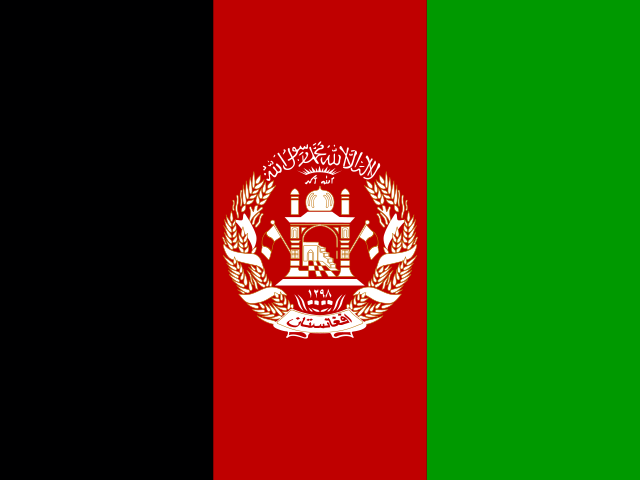
 Afghanistan
Comprehensive education database information
Education System in Afghanistan
Overview of Afghanistan
Afghanistan is a landlocked nation situated in South Asia, bordered by several countries including China, Pakistan, Iran, Tajikistan, and Uzbekistan. The country's geography is marked by the Hindu Kush Mountains, which divide it into three distinct regions: the central highlands, the fertile northern plains, and the arid southwestern plateau. Afghanistan's population, nearing 30 million, is diverse, comprising various ethnic groups such as Pashtuns, Tajiks, Hazaras, Uzbeks, Turkmen, Aimaqs, and Baluchis. The Pashtuns form the largest group, making up between 38% to 50% of the population, followed by the Tajiks at around 25%, and the Hazaras at 19%.
Historically, Afghanistan has been the focal point of numerous geopolitical conflicts due to its strategic location. From the ancient conquests of figures like Darius I and Alexander the Great to the colonial ambitions of Britain and Russia, the region has experienced significant turmoil. The Soviet invasion in 1979 and the subsequent rise of the Taliban led to severe disruptions in the country’s education system, with widespread destruction of educational infrastructure. As Afghanistan seeks to rebuild, the challenges in its educational landscape remain daunting, especially for the millions of children who have been affected by years of conflict.
Introduction to the Education System
Afghanistan’s education system is characterized by a dual structure encompassing both religious education provided in mosques and formal academic education available in government-run schools. The system has undergone multiple transformations, especially after long periods of conflict and the Taliban's restrictive policies that severely limited educational access, particularly for girls. Currently, the Afghan government is focused on revitalizing the educational framework to meet the needs of its youth, with a pressing demand for trained teachers and educational resources.
Levels of Education
Primary Education
- Age Range: Children typically begin their primary education at age 7, continuing until they are around 13 years old.
- Curriculum: The primary education curriculum is designed to provide basic skills, focusing on:
- Reading
- Writing
- Arithmetic
- National culture
- Enrollment: While education is compulsory and free, only about 43% of children complete primary school, with significant disparities between boys and girls.
Middle Education
- Duration: After completing primary school, students enter a three-year middle school program.
- Assessment: At the end of this phase, students must pass an examination to qualify for further education.
Secondary Education
- Structure: Secondary education is divided into two three-year cycles:
- Middle Secondary: Begins at age 13 and ends at 16.
- Upper Secondary: Starts at age 17 and concludes at age 19.
- Paths: Students have two primary pathways:
- Academic Path: Prepares students for university education.
- Vocational Path: Includes practical subjects such as:
- Applied agriculture
- Aeronautics
- Arts
- Commerce
- Teacher training
- Examination: Both pathways culminate in a baccalaureate examination, essential for graduation.
Vocational Education
Vocational education plays a crucial role in the recovery of Afghanistan’s educational landscape. Programs exist in specialized schools known as Technicums, which cater to students who have completed at least grade 8. These institutions focus on providing practical skills in various fields, helping students prepare for the workforce.
Tertiary Education
- Current Landscape: Afghanistan is home to several universities, with ongoing efforts to rehabilitate institutions that were damaged during years of conflict. Currently, there are 68 higher education institutions.
- Languages of Instruction: Courses are primarily taught in Pashto, Dari, and occasionally English, reflecting the country's linguistic diversity.
- Degrees Offered:
- Bachelor's Degrees: Typically span four years, though fields like engineering and veterinary medicine may require five years, and medical programs extend to seven years.
- Master's Degrees: Available after completing a bachelor's degree, requiring an additional two years of study.
- Doctoral Degrees: Offered in select disciplines, these programs require a master’s degree and generally take three years to complete.
- Notable Institutions:
- Kabul University, established in 1931, is significant for its unique outdoor examination settings.
- Kabul Medical University, founded in 1923, specializes in medical education.
Teacher Training
Teacher training is essential for the growth of Afghanistan’s educational system. Colleges dedicated to teacher training offer two-year programs for those aiming to teach at the primary and secondary levels. The pressing need for qualified educators, particularly for primary education, is a significant focus, with the government recognizing the importance of investing in teacher development to ensure quality education.
In summary, while Afghanistan's education system faces numerous challenges stemming from its tumultuous history, ongoing efforts aimed at reform and revitalization are crucial in shaping a brighter future for its youth. The combination of academic and vocational education, alongside a commitment to inclusivity, particularly for girls, represents a foundational step toward rebuilding the nation’s educational framework.