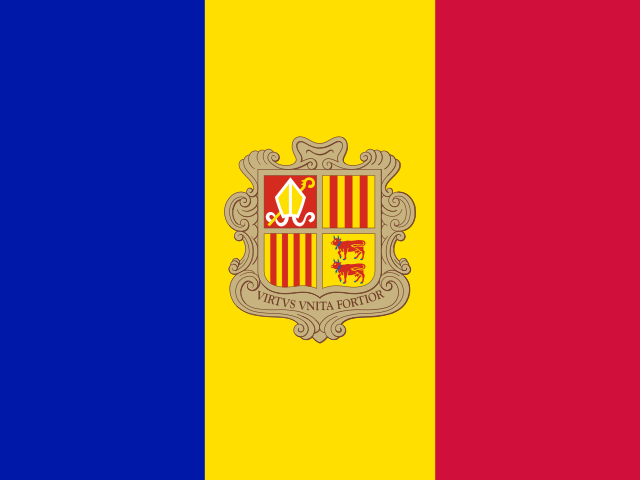
 Andorra
Comprehensive education database information
Education System in Andorra
Overview of Andorra
The Principality of Andorra is a small, landlocked nation nestled in the Pyrenees Mountains between France and Spain. It ranks as the sixth smallest country in Europe, with a population of approximately 82,627 residents. The literacy rate in Andorra is impressively high at 100%, reflecting the nation’s commitment to education. The official language is Catalan, but Spanish and French are also widely spoken, reflecting the country's cultural diversity. Andorrans enjoy one of the highest life expectancies in the world, at 83.5 years. Historically, Andorra's roots trace back to Charlemagne, who recognized the Andorran people for their resistance against the Moors. The unique co-principality status of Andorra, established in 1278, sees sovereignty shared between the Bishop of Urgell from Catalonia and the President of France. In 1993, Andorra became a member of the United Nations and the Council of Europe, further solidifying its presence in international affairs.
Introduction to the Education System
The educational framework of Andorra is distinctive due to the coexistence of three different educational systems, namely the Andorran, French, and Spanish systems. Education is both free and compulsory for children from the ages of 6 to 16, ensuring that all children have access to basic education. The Andorran government plays a pivotal role in facilitating this education, particularly in terms of infrastructure and staffing.
Primary Education
Structure and Language of Instruction
Education for young learners in Andorra is structured around three primary language mediums:
- Andorran
- French
- Spanish
Approximately one-third of school-age children are enrolled in each type of educational institution. The Andorran government is responsible for:
- Providing educational facilities
- Employing teachers who instruct in Catalan
Schools that wish to offer instruction in Spanish or French must secure their own language teachers.
Duration and Curriculum
Compulsory education is governed by the Spanish curriculum and lasts until the age of 16. The primary education stage encompasses 6 years, forming part of the overall 12-year educational journey.
Secondary Education
Enrollment and Continuation Rates
Each year, around 5,500 children enroll in primary schools across Andorra. However, less than 47% of those who qualify proceed to secondary education. This stage offers students a range of programs to cater to diverse interests and abilities:
- General program
- Technical program
- Special needs program
These options allow students to pursue education that aligns with their personal and career aspirations.
Tertiary Education
Higher Education Institutions
Students seeking higher education in Andorra have the option to enroll in:
- University of Andorra
- Universities in Spain or France
Enrollment is fairly distributed among these institutions, providing students with various academic opportunities.
University of Andorra
Established in 1997, the University of Andorra has a relatively small student population and primarily focuses on distance learning programs. The university offers an array of graduate programs, particularly in:
- Nursing
- Computer Science
The most popular fields of study at the University of Andorra include:
- Business Administration
- Nursing
- Educational Science
Postgraduate Opportunities
Additionally, postgraduate programs are available in conjunction with the Universitat Oberta de Catalunya (Open University of Catalunya), covering areas such as Andorran law, child rights, and education. These programs typically range from 1 to 3 years, depending on the field of study, and participants can earn diplomas from both the University of Andorra and partner universities in Spain or France.
Conclusion
The education system in Andorra is a reflection of its rich cultural heritage and commitment to providing high-quality education. With an emphasis on accessibility and diversity, students are offered a variety of learning pathways that cater to their individual needs, ensuring a well-rounded educational experience.