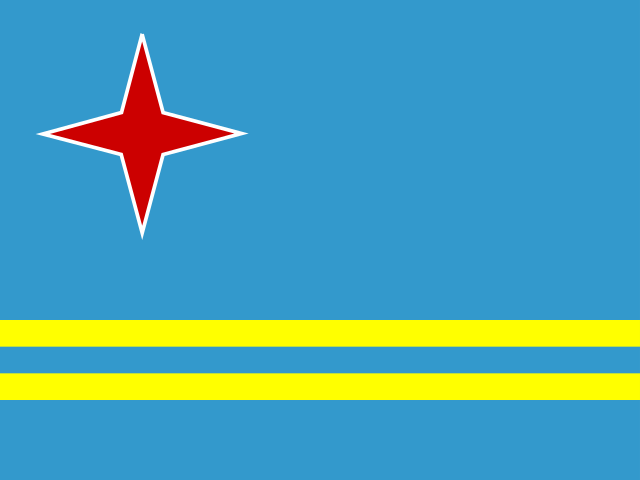
 Aruba
Aruba
Comprehensive education database information
Education System in Aruba
Aruba is a small island located in the Caribbean Sea, just 15 miles off the northwest coast of Venezuela. Part of the Windward Islands group, which also includes Bonaire and Curaçao, Aruba has a rich history that traces back to Arawak Indian settlements as early as 1,000 A.D. The island was claimed by Spanish explorers in the late 15th century and later became a Dutch colony in the 17th century. Aruba became fully autonomous within the Kingdom of the Netherlands in 1986, and today, it boasts a population of approximately 80,000 residents. The official language is Dutch, with Papiamento—an amalgamation of Spanish, Portuguese, English, and Dutch—serving as the second official language and being widely spoken by the population. The Department of Education Aruba oversees the educational framework of the island.
Overview of the Education System
The education system in Aruba is largely influenced by the Dutch model and aims to cater to the diverse needs and aptitudes of its students. Public education is provided at no cost where applicable, ensuring access for all children.
Primary Education
Kindergarten is available to children before they enter formal schooling, although attendance is optional.
- Primary School:
- Age Range: Children attend primary school from ages 6 to 12.
- Type: The primary education system primarily consists of private institutions.
- Curriculum: The focus is on a balanced academic program that lays the foundation for future education.
Secondary Education
At the secondary education level, students are presented with four distinct educational pathways, each governed by different educational boards:
- Vocational Secondary Education: A 4-year program designed for those looking to enter the workforce directly after school.
- General Secondary Education: A 4-year track that prepares students for further academic pursuits.
- Higher General Secondary Education: This pathway includes an additional year (Form 5) and culminates in the Hoger Algemeen Voortgezet Onderwijs (HAVO) diploma.
- Pre-University Education: This track also includes an extra year (Form 6) and leads to the Voorbereidend Wetenschappelijk Onderwijs (VWO) diploma.
Vocational Education
For students who prefer a more hands-on approach, vocational education offers an alternative to traditional secondary schooling. Key features include:
- Blended Learning: This model combines classroom instruction with practical work experience, allowing students to apply their learning in real-world contexts.
- Levels: The vocational program is structured into lower and higher levels to accommodate varying skill levels and career aspirations.
This pathway ensures equitable educational opportunities for all children in Aruba, allowing them to pursue their interests and strengths.
Tertiary Education
Aruba provides a range of options for higher education, catering to diverse academic interests:
-
Private Medical Schools:
- All Saints University of Medicine.
- Xavier University School of Medicine.
- Both institutions maintain affiliations with universities and healthcare facilities in the United States.
-
University of Aruba:
- Faculties Offered:
- Law
- Accounting, Finance & Marketing
- Hospitality & Tourism Management
- Arts & Science
- Student Demographics: The university attracts students from Aruba, as well as from the broader Caribbean region and South America.
- Faculties Offered:
Teacher Education
Teacher training is a critical component of the education system in Aruba:
-
Primary School Teachers: Training occurs at a Teacher Training College located in Curaçao. Admission requires either a HAVO or VWO diploma, and the program lasts for four years, culminating in a certification.
-
Secondary School Teachers: These educators undergo a Bachelor of Education program at the University of the Netherlands Antilles, also situated in Curaçao.
In summary, Aruba's education system is structured to provide comprehensive and diverse learning pathways for students, fostering both academic and vocational skills essential for their future endeavors.