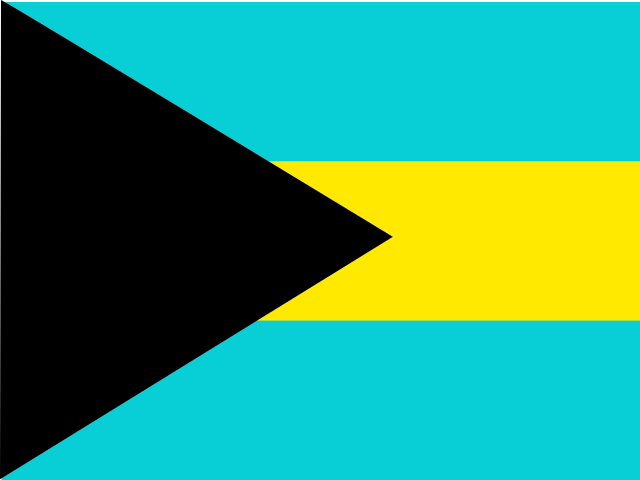
 Bahamas
Comprehensive education database information
Education System in The Bahamas
The Commonwealth of The Bahamas is an archipelago consisting of around 700 islands and 2,400 cays, situated near the southeastern coast of the United States, particularly Florida. The islands were originally inhabited by the Arawak people until Christopher Columbus arrived in 1492. Following the decline of the Arawaks due to European colonization, the British established a permanent presence in the 17th century. The Bahamas became a British crown colony in 1717 and gained independence in 1973 while remaining a member of the Commonwealth of Nations. The educational landscape in The Bahamas has evolved significantly over the centuries, with the first schools established by various religious groups. Over time, significant reforms led to the establishment of a more structured education system.
The education system in The Bahamas is designed to provide comprehensive learning opportunities for its citizens. It follows a structure influenced by the British educational model and is divided into several levels: Primary Education, Secondary Education, Vocational Education, and Tertiary Education. Education is compulsory for children between the ages of 5 and 16, ensuring a foundational level of education for all.
Primary Education
Overview
- Compulsory Age: Education is mandatory for children aged 5 to 16.
- School Attendance: The attendance rate in primary schools is impressively high, with about 75% of schools being state-owned.
- Government Support: The Bahamian government allocates approximately 20% of its national budget to the education sector, highlighting its commitment to fostering educational development.
Structure
- Duration: Primary education lasts for a total of 6 years, beginning at age 6.
- Progression: Students are required to pass annual assessments to move on to the next grade level, ensuring that they meet the necessary academic standards.
Secondary Education
Overview
- Age Range: Students typically enter secondary education at age 11 and complete it by age 18.
- School Types: While most secondary schools operate independently, smaller Family Islands may combine secondary and primary education for economic efficiency.
Graduation Requirements
- Duration: Secondary education spans 6 years.
- Credentials: Upon completion, students earn the Bahamas High School Diploma, introduced in 2017. Prior to this, students received various qualifications, including the Bahamas General Certificate of Secondary Education, GCE O Levels, or the CXC Caribbean Secondary Education Certificate.
Vocational Education
Government Initiatives
- The Bahamian government has actively promoted vocational training, launching its second technical and vocational training initiative in 2007 aimed at improving the quality of education.
Focus Areas
-
The initial phase included:
- Developing educational policies
- Enhancing the apprenticeship system
- Improving financial sustainability
- Tracking alumni progress
-
Subsequent efforts have concentrated on:
- Providing skills training
- Focusing on tourism training
- Strengthening vocational preparation systems
Tertiary Education
Local Institutions
- The Bahamas offers a variety of options for tertiary education, alongside opportunities within the wider Caribbean region. Key institutions include:
- Princess Margaret Hospital, which features a Nursing School.
- University of the West Indies Center for Hotel and Tourism Management, specializing in hotel management and tourism studies.
- The University of the Bahamas, which provides both associate and bachelor's degree programs.
International Collaboration
- Some American universities have established branches in the Bahamas, offering undergraduate courses on weekends, thereby expanding educational opportunities for local students.
In conclusion, the education system in The Bahamas has undergone significant transformations, moving from its early religious roots to a more structured, government-supported model. With compulsory education and a focus on both academic and vocational training, The Bahamas aims to equip its citizens with the knowledge and skills necessary for personal and professional success.