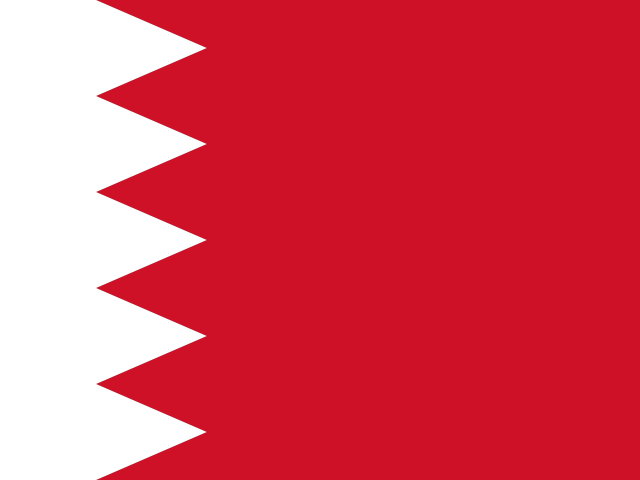
 Bahrain
Comprehensive education database information
Education System in Bahrain
The Kingdom of Bahrain, an archipelago located off the eastern coast of Saudi Arabia in the Persian Gulf, covers an area slightly larger than Washington, D.C. With a population of around 677,000, Bahrain is a small yet significant nation in a region known for its complexities. As its oil reserves diminish, Bahrain has shifted its economic focus towards petroleum processing and has established itself as a hub for international banking. For centuries, education has been a cornerstone of the country’s development, with a rich history that includes both traditional Koranic teachings and contemporary secular education dating back to the early 20th century.
In 1919, Bahrain marked the official inception of its modern public education system with the establishment of Al-Hidaya Al-Khalifia school for boys. The country has made considerable strides in education since then, emphasizing the importance of female education as well. By 1930, the government took over control of schools to ensure better management and accessibility. Today, Bahrain's education system is characterized by its commitment to free and compulsory education, which encompasses several levels including primary, intermediate, secondary, vocational, and higher education.
Primary Education
Overview
- Duration: 6 years
- Compulsory: Yes, primary education is now mandatory
- Curriculum:
- General academic subjects
- Religious instruction lasting 9 years
- Accessibility: Education is provided at no cost to students
Primary education is designed to lay the foundation for lifelong learning, and it is structured to be inclusive and accessible to all children in Bahrain.
Middle Education
Overview
- Duration: 3 years at intermediate school
- Curriculum: A standardized academic program is followed
- Drop-out Rate: Approximately 25% of students leave school after primary education, despite the availability of free educational resources such as supplies, uniforms, transportation, and meals
Middle education serves as a critical transition phase, where students are expected to build upon their primary education and prepare for secondary schooling.
Secondary Education
Overview
- Duration: 3 years
- Options: Students can choose from three educational tracks:
- General
- Commercial
- Industrial
- Accessibility: Education continues to be free
- Enrollment: Only about 40% of primary school graduates proceed to secondary education, with a notable disparity affecting female students
Secondary education in Bahrain is designed to cater to diverse interests and career paths, allowing students to specialize according to their strengths and aspirations.
Vocational Education
Overview
- Commitment: The Bahraini government is committed to enhancing adult education opportunities
- Facilities: There are over 50 adult education centers available throughout the country
- Skills Offered: These centers provide training for a variety of practical skills, preparing individuals for the workforce
Vocational education plays a pivotal role in equipping individuals with the skills necessary for employment and personal development, catering to the needs of adults seeking to improve their qualifications.
Tertiary Education
Overview
- Leading Institutions:
- Bahrain Polytechnic: Focuses on harmonizing traditional values with modern scientific approaches
- University of Bahrain: Established in 1986, it stands as the largest educational institution in the region, serving as a collaborative effort among Gulf States
- Programs Offered: The university provides a range of academic disciplines, including arts, information technology, sciences, engineering, medicine, and English language studies
- Quality Control: The introduction of private colleges with varying standards has prompted the government to implement a quality control system to maintain educational excellence
Tertiary education in Bahrain aims to foster a skilled workforce that meets the demands of a rapidly evolving global economy, providing students with the opportunity to pursue higher learning and professional growth.
In conclusion, Bahrain's education system is a reflection of its historical commitment to learning and progress. With a structured approach that ensures free and compulsory education at various levels, the country continues to strive towards enhancing educational quality and accessibility for all its citizens.