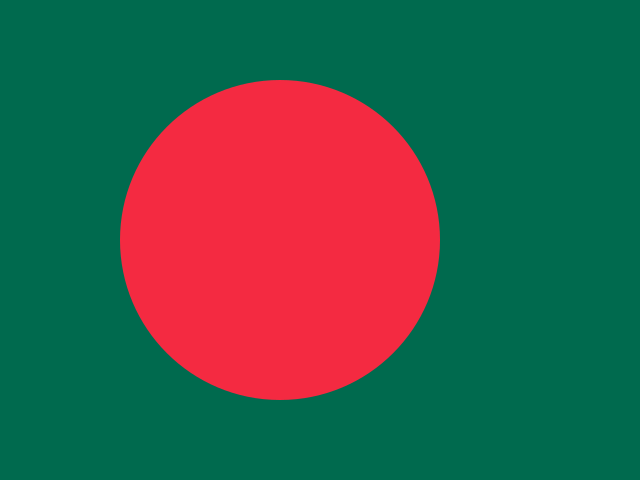
 Bangladesh
Comprehensive education database information
Education System in Bangladesh
Bangladesh, a country established in 1971 after gaining independence from West Pakistan, is located in southern Asia along the Bay of Bengal. It is bordered by India and Myanmar. The nation has faced significant challenges, including recurrent flooding and famine, which have historically hindered its economic growth. After a tumultuous beginning marked by a brutal war for independence, Bangladesh has gradually developed a parliamentary democracy, with a largely ceremonial presidential role. The education system in Bangladesh has roots in the educational frameworks of India and Pakistan, reflecting its historical ties. The modern university system in the country was influenced by British educational models and is primarily regulated by the Ministry of Education.
Overview of the Education System
The educational framework in Bangladesh is multifaceted, providing various pathways through primary, middle, secondary, vocational, and tertiary education. This system caters to different educational preferences, including general, madrasah (religious), and vocational training, and is significantly supported by the government.
Primary Education
- Duration: 5 years (ages 6 to 10)
- Cost: The primary education is fully funded by the government, allowing children in this age group to attend school without any fees, as mandated by national policy.
- Administration: The governance of local education is managed through a structured hierarchy of school boards that oversee the implementation of educational standards and practices.
Middle Education
- Entry Age: Approximately 11 years
- Type: This stage consists of junior secondary education.
- Significance: The middle education phase is pivotal as students must make critical decisions regarding their educational and career paths that will influence their future opportunities.
Secondary Education
- Duration: The final two years of the overall ten-year schooling system.
- Options:
- General Secondary Schools: Students can choose to specialize in various disciplines such as:
- Humanities
- Science
- Commerce
- Madrasah Education: This alternative education route culminates in a distinct series of examinations based on religious studies.
- General Secondary Schools: Students can choose to specialize in various disciplines such as:
- Examinations: To complete secondary education, students are required to pass a secondary school certificate examination that is overseen by a minimum of seven school boards.
Vocational Education
- Institutions: Vocational training is offered through specialized institutes and technical training centers.
- Administration: This sector is managed by both the Ministry of Education and the Ministry of Labor and Employment.
- Options:
- Programs that lead to longer-term professional qualifications.
- Shorter courses aimed at specific job skills to enhance employability.
Tertiary Education
- Pathways:
- After obtaining a higher secondary education certificate, students may continue their studies at technical or polytechnic institutes for an additional two years to gain practical skills.
- Alternatively, students can enroll in various private or state-funded universities, where undergraduate programs typically last for five years.
- Notable Institution:
- Dhaka University: Founded in 1921, Dhaka University is often dubbed the "Oxford of the East." Its establishment has played a crucial role in the country's quest for independence and self-governance.
In conclusion, the education system in Bangladesh is a comprehensive structure that offers diverse educational opportunities from primary through tertiary levels. It is designed to accommodate various learning preferences while addressing the broader socio-economic challenges faced by the nation. Through continuous government support and reform, the aim is to enhance educational access and quality for all citizens.