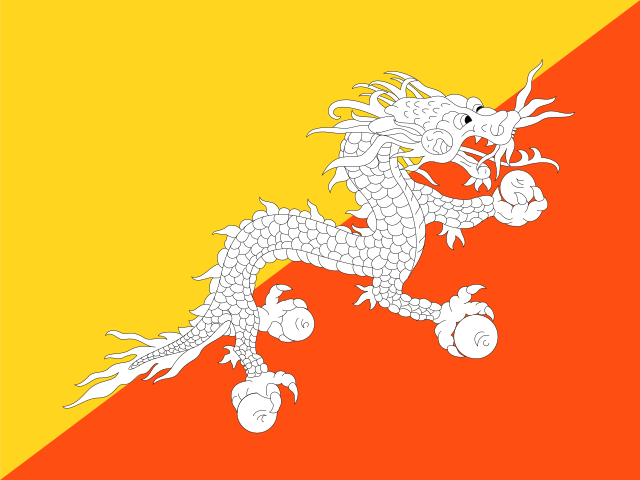
 Bhutan
Comprehensive education database information
Education System in Bhutan
Overview of Bhutan
The Kingdom of Bhutan is a landlocked nation located in South Asia, bordered by India to the south and China to the north. With a population of approximately 682,321, Bhutan has a literacy rate of around 47%. The official language is Dzongkha, although various Tibetan and Nepalese dialects are also spoken across the country. Evidence of habitation in Bhutan dates back to 2000 BC, with early tribes engaging in conflicts until they unified in the early 17th century under the leadership of Tibetan Lama Shabdrung Ngawang Namgyal.
Throughout its history, Bhutan has navigated complex relationships with larger powers. In 1865, Bhutan ceded territory to British India in exchange for financial support. The establishment of a monarchy in 1907, aided by the British, marked a significant political development, followed by treaties in the early 20th century that shaped Bhutan's external relations. The country gained more autonomy over its foreign affairs in 2007, leading to the establishment of its first parliament and the ratification of a new constitution in 2008. The education system falls under the jurisdiction of the Ministry of Education, which oversees various levels of schooling from primary through tertiary education.
Introduction to Bhutan's Education System
Bhutan's education system is designed to meet the needs of its diverse population while respecting its unique cultural and geographical context. The system is structured into three primary levels: Primary Education, Secondary Education, and Tertiary Education. Each level is geared toward providing students with the skills and knowledge necessary for personal development and community contribution.
Primary Education
Structure and Participation
- Compulsory Education: Education is compulsory for children aged 6 to 17, ensuring that all young citizens have access to learning opportunities.
- Duration: Primary education spans six years, beginning at age six. In some areas, particularly where schools are established, students may attend for an extended duration of seven years.
- Language of Instruction: The primary medium of instruction is English, which facilitates communication and learning in a global context.
Examination
At the conclusion of primary education, students are required to take the All Bhutan Primary Certificate Examination, which assesses their knowledge and readiness to advance to secondary education.
Secondary Education
Structure and Curriculum
- Lower Secondary Education: This level includes grades VII to IX, lasting for three years. Students must pass an external examination to receive the Bhutan Certificate of Secondary Education upon completion.
- Upper Secondary Education: Spanning grades X to XII, this three-year program culminates in the Bhutan Higher Secondary Education Certificate after students pass another external examination.
Completion and Options
- Completion Rates: A smaller percentage of students transition from lower to upper secondary education, with many opting to pursue alternative educational paths.
- Curriculum Focus: The curriculum during secondary education is primarily academic, with limited opportunities for specialization.
- Private Education: Families with more financial resources may choose to enroll their children in private schools, including those located abroad, to enhance educational prospects.
Tertiary Education
Institutions Overview
The tertiary education system in Bhutan consists of various institutions, including:
- One higher-level junior college
- Two teacher training colleges
University of Bhutan
Founded in 2003 by royal decree, the University of Bhutan is the country's sole university and plays a pivotal role in higher education. The university offers a range of programs, including:
- Diplomas and Bachelor's Degrees in fields such as:
- Science & Technology
- Business Studies
- Traditional Medicine
- Language & Culture
- Education
- Health Sciences
- Natural Resources
- Management
Opportunities for Study Abroad
For students whose educational aspirations cannot be fulfilled within the country, opportunities exist for pursuing studies abroad, allowing them to gain broader perspectives and advanced knowledge in their chosen fields.
Conclusion
Bhutan's education system reflects the country's commitment to fostering personal growth and societal development. By providing structured educational pathways from primary through tertiary levels, Bhutan aims to equip its citizens with the necessary skills to navigate a rapidly changing world while preserving its rich cultural heritage.