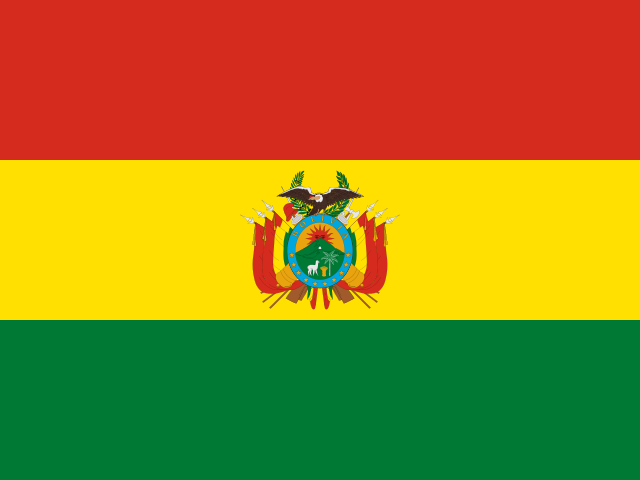
 Bolivia
Comprehensive education database information
Education System in Bolivia
Overview of Bolivia
The Plurinational State of Bolivia, one of South America's two landlocked nations, is characterized by its diverse geography, ranging from towering snow-capped mountains to expansive rainforests and arid plains. This country is bordered by Chile and Peru to the west, Brazil to the north and northeast, Paraguay to the southeast, and Argentina to the south. The capital city of Sucre serves a constitutional and judicial role, while La Paz, the largest city, functions as the administrative center. Other significant urban areas include Santa Cruz, Cochabamba, El Alto, Oruro, and Potosí.
Bolivia's population, approximately 9 million, is ethnically diverse, with over half identifying as Amerindian (primarily Quechua and Aymara), while mestizos and individuals of European descent make up around 45%. Spanish is the official language, alongside 36 indigenous languages. Predominantly Roman Catholic, the population also includes individuals who adhere to indigenous beliefs and a small percentage of Protestants.
Bolivia has faced considerable political and economic challenges since gaining independence in 1825, marked by frequent civil unrest and changes in governance. These issues have historically hindered progress in various sectors, including education. Despite legislative efforts to promote education, many marginalized populations, particularly indigenous communities, have often been overlooked. The country's literacy rate has improved significantly over the years, rising to over 87% as of the early 21st century, aided by reforms aimed at expanding educational access.
Introduction to the Education System
Bolivia's education system is structured to provide comprehensive learning opportunities from early childhood through higher education. However, it faces numerous challenges related to accessibility, quality, and infrastructure. The Ministry of Education, Culture, and Sports oversees the education sector, working to implement reforms that address historical inequities and improve literacy rates.
Education Levels
The Bolivian education system is divided into several key levels, each with its own structure and challenges.
Primary Education
Primary education in Bolivia is designed to be free and compulsory for the first six years, covering grades 1 through 6. However, there are significant hurdles that impact its effectiveness:
- School Time Division: Primary education is organized into two shifts—morning and afternoon—resulting in a compressed curriculum that can hinder a rich learning experience.
- Underfunding and Infrastructure Issues: Many state schools are inadequately funded and poorly maintained, adversely affecting the quality of education provided.
- Compulsory Education Challenges: While primary education is theoretically mandatory, approximately 20% of children do not attend or benefit from the system, particularly in rural and underserved areas.
Secondary Education
Secondary education encompasses grades 7 through 10 and is not compulsory. Key characteristics of this level include:
- Low Enrollment Rates: Less than 25% of young adults in Bolivia engage in secondary education, reflecting a significant gap in educational access.
- Private School Dominance: The majority of secondary students attend private institutions, which may follow different educational models, including:
- American Educational Model: Some private schools adopt structures similar to those in the United States.
- Religious Affiliation: Others are linked to religious organizations, emphasizing traditional values.
- Inequitable Access: The secondary education system tends to favor wealthier families, often neglecting the educational needs of disadvantaged groups, particularly in rural areas.
Vocational Education
Vocational training in Bolivia is an essential component of the education system, yet it faces notable challenges:
- Lack of Coordination: Vocational education is largely managed by private institutions located in urban centers, leading to inconsistencies in training quality and availability.
- Role of International Aid: Various international organizations are involved in initiatives aimed at enhancing vocational training opportunities.
- Limited Access for Rural Youth: Young individuals from impoverished rural backgrounds face significant barriers to accessing vocational training, leaving many without pathways to demonstrate their skills and capabilities.
Tertiary Education
The tertiary education landscape in Bolivia includes a variety of institutions providing advanced educational opportunities:
- Types of Institutions: There are 10 publicly funded universities and 23 private universities across the nation.
- Prominent Universities:
- University of San Andrés: Located in La Paz, it is the largest university by student enrollment.
- University of San Francisco Xavier: Established in 1624 in Sucre, this is Bolivia's oldest university. Originally founded to educate the elite in theology and law, it has since expanded its access to a broader student population, reflecting changes in the national education landscape.
Conclusion
The education system in Bolivia is evolving, with ongoing efforts to improve access and quality for all students, particularly in underserved populations. While significant advancements have been made, particularly in literacy rates and primary education, challenges remain, particularly in secondary and vocational education. The commitment to reform and the involvement of various stakeholders are crucial for fostering a more equitable and effective educational environment in Bolivia.