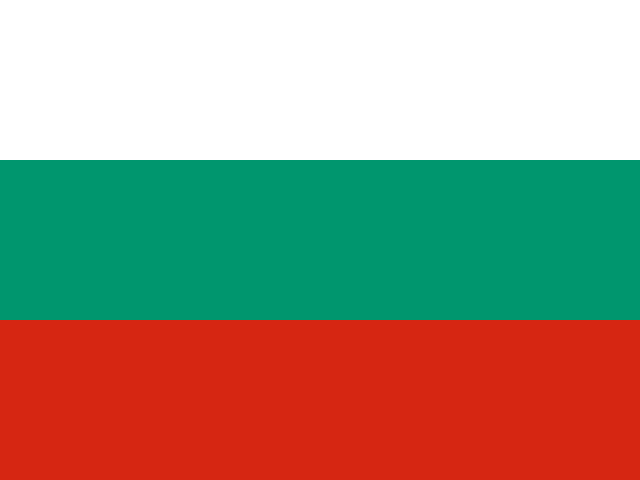
 Bulgaria
Comprehensive education database information
Education System in Bulgaria
Overview of Bulgaria
Bulgaria is located in southeastern Europe, bordered by Greece, Turkey, Macedonia, Serbia, Romania, and the Black Sea. The country has a rich historical tapestry, having been home to various civilizations, including the ancient Thracians. The establishment of the first Bulgarian Kingdom dates back to 681 AD, and during the Middle Ages, particularly in the 10th and 11th centuries, Bulgaria was a significant center for early Slavic culture and Orthodox Christianity.
Following nearly five centuries of Ottoman rule beginning in 1396, Bulgaria regained its independence in 1876. The nation navigated turbulent times, including involvement in both World Wars, and subsequently fell within the Soviet sphere of influence, becoming a People’s Republic in 1946. The peaceful transition away from communism in 1989 paved the way for democratic reforms and a market economy. Currently, Bulgaria is a member of NATO and has been in negotiations for European Union membership.
With a population of approximately 7.9 million, its capital, Sofia, is home to around 1.2 million residents, and the official language is Bulgarian. Significant educational reforms have taken place since 1990, including the transformation of specialized higher schools into universities and the integration of independent colleges into the higher education framework. The Bulgarian education system has evolved to align with the Bologna Process, aiming to create a European Higher Education Area.
Introduction to the Education System
The Bulgarian education system is governed by the Ministry of Education and Science, ensuring that education is both accessible and comprehensive. Education is compulsory for children aged 7 to 16 and is provided free of charge in state-run institutions. The system is structured into various levels, from primary education through tertiary education, each serving as a foundation for the next stage of academic or vocational development.
Primary Education
Compulsory Education
Compulsory education in Bulgaria begins at the age of 7 and continues until the age of 16. The primary education phase lasts for four years, during which children are instructed in a variety of subjects designed to provide a well-rounded foundation.
Curriculum
The academic curriculum includes the following subjects:
- Bulgarian language and literature
- Foreign languages
- Information technologies
- Mathematics
- Natural sciences
- Social sciences and civics
- Physical education and sport
Before entering primary school, children must complete a one-year pre-school program, which prepares them for the academic challenges ahead.
Middle Education
After primary education, students progress to the middle education phase, typically conducted over the final four years of elementary schooling, referred to as junior high schools. To advance to further education, students must obtain a certificate of elementary education.
Secondary Education
Pathways
Bulgaria offers two primary pathways for students at the secondary education level:
- Comprehensive high schools: These schools provide a broad academic curriculum.
- Vocational schools: These institutions focus on practical training and skill development.
Students are required to remain enrolled in school until at least age 16. Upon graduation from comprehensive high schools, students must take examinations in:
- Bulgarian language
- A subject of their choice
Vocational Education
Vocational training presents certain challenges, particularly due to its highly centralized nature. Recent reforms are aimed at improving the vocational education landscape, addressing issues such as:
- The lack of an integrated framework for vocational training
- Constraints within the institutionalized system of vocational education
These reforms seek to enhance the quality and accessibility of vocational training.
Tertiary Education
Higher Education Institutions
Bulgaria's higher education system encompasses a variety of institutions, including:
- Specialized higher schools
- Colleges
- Universities
Degree Programs
At the university level, undergraduate programs generally require a minimum of four years of study to complete. Students can further their education by pursuing master's degrees and doctorates. The oldest university in Bulgaria, the Saint Clement of Ohrid University of Sofia, was founded in 1888 and is recognized for its historical significance.
Conclusion
In conclusion, Bulgaria's education system has undergone significant transformation to adapt to modern demands and international standards. With a strong emphasis on both academic and vocational training, Bulgaria strives to provide its citizens with the skills and knowledge necessary for success in a rapidly changing world. Through continued reforms and alignment with European educational frameworks, Bulgaria is committed to fostering an inclusive and effective education system for all its students.