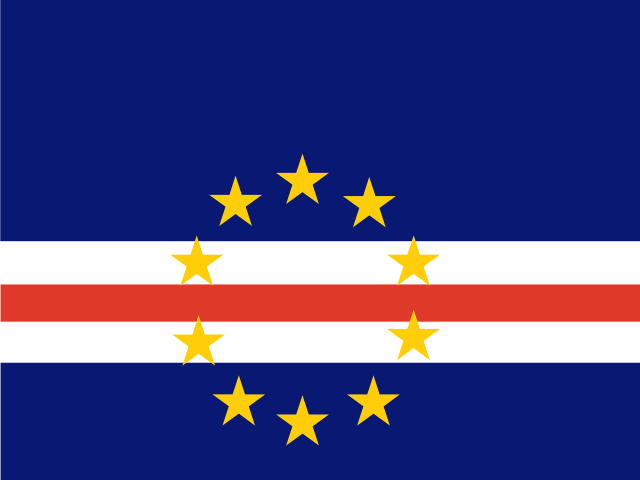
 Cabo Verde
Comprehensive education database information
Education System in Cabo Verde
Cabo Verde, an archipelago located off the northwest coast of Africa, is known for its rich cultural heritage and diverse landscapes. The country consists of ten volcanic islands, each offering unique attributes in terms of geography and society. Despite its limited natural resources, Cabo Verde has made strides in developing its educational framework, vital for fostering economic growth and social development.
Overview of the Education System
The education system in Cabo Verde is structured to address various levels of learning, from primary to tertiary education. While government initiatives aim to improve literacy rates and educational access, the system still grapples with challenges such as inadequate infrastructure and varying quality of education across the islands. The educational framework is designed to provide foundational skills, vocational training, and advanced academic opportunities.
Primary Education
Key Features
- Compulsory Duration: Primary education in Cabo Verde spans six years and serves as the cornerstone of the educational experience.
- Literacy Rate: The nation faces a literacy rate of approximately 70%, highlighting substantial gaps in access and educational quality.
- Continuation Rates: Only about 50% of pupils who complete primary education transition to secondary schooling, indicating a significant drop-off in educational engagement.
Secondary Education
Structure and Curriculum
Secondary education is divided into two main phases:
- Lower Secondary Education: This phase lasts for three years, focusing on foundational academic subjects.
- Higher Secondary Education: Following lower secondary, students can undertake an additional two years of study, which prepares them for higher education or vocational paths.
Admission to University
To gain admission to university, students must complete both phases of secondary education. However, there is flexibility, as some students may opt to leave the education system after completing lower secondary.
Vocational Education
Objectives and Focus Areas
Vocational education in Cabo Verde is designed to fill specific skill gaps identified within the national economy. Key aspects include:
- Purpose: The aim is to equip students with practical skills that are directly applicable in the workforce.
- Emphasis on Tourism: There is a strong focus on training for the tourism sector, supported by partnerships with donor nations to enhance local capabilities and promote economic self-reliance.
Tertiary Education
Higher Education Institutions
Cabo Verde offers several higher education institutions where students can pursue advanced degrees. Notable establishments include:
- Jean Piaget University of Cape Verde
- University of Cape Verde
- Various specialized institutes focusing on fields like engineering, maritime studies, nursing, and teacher education.
Economic Influences
Access to higher education is often determined by economic factors, including the affordability of tuition and living expenses. Due to these constraints, Cabo Verde tends to send many of its most talented students abroad for further studies, as the local system struggles to meet the standards typically associated with developed nations.
In summary, while the education system in Cabo Verde shows promise with its structured levels of learning, it still faces significant challenges. Continued efforts are required to enhance literacy rates, improve educational quality, and ensure that all students have access to the opportunities necessary for their development and that of the nation.