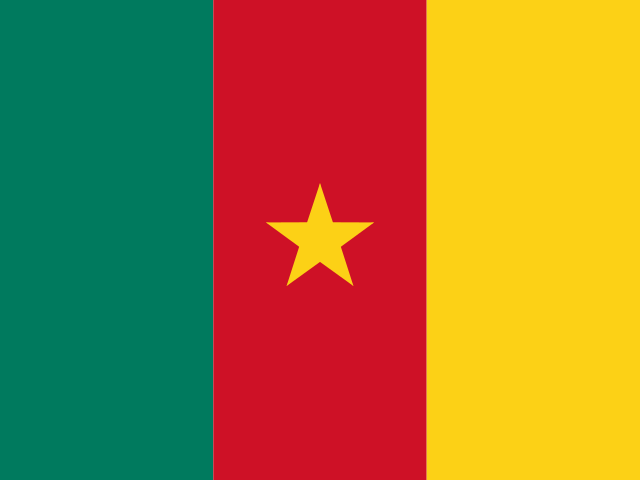
 Cameroon
Comprehensive education database information
Education System in Cameroon
Cameroon is a Central African nation characterized by its rich cultural diversity and historical significance. The country is home to over 250 ethnic groups and operates a bilingual system, with French and English as official languages. This unique cultural backdrop is reflected in its education system, which is divided into two main sub-systems based on the French and British educational models.
Overview of the Education System
The education system in Cameroon is structured to provide education across multiple levels, including primary, secondary, vocational, and tertiary education. In 1996, the government declared education free and compulsory for children aged 6 to 12, which has significantly shaped access to primary education. Despite this, challenges remain, particularly regarding attendance and financial burdens on families. The oversight of education falls under the Ministry of Education and the Ministry of Higher Education, ensuring that both public and private institutions adhere to established educational standards.
Primary Education
Structure
- Age Range: Primary education in Cameroon typically spans from ages 6 to 12.
- Duration: The primary cycle consists of 6 years of schooling.
- Completion Certificate: Upon finishing primary education, students receive the Certificat d'Études Primaires Élémentaires (CEPE) in the Francophone system or the First School Leaving Certificate in the Anglophone system.
Attendance and Challenges
- School Attendance: Approximately 70% of children in the relevant age group attend school, indicating a significant gap in access.
- Financial Responsibilities: Parents are often required to cover costs associated with uniforms and learning materials, which can hinder participation in education.
Secondary Education
Dual Systems
Cameroon's secondary education is divided into two distinct systems, reflecting its colonial history:
-
Francophone System:
- Lower Secondary: Lasts 4 years, culminating in the Brevet D'Études de Premier Cycle du Second Degré.
- Upper Secondary: Lasts 3 years, leading to the baccalauréat.
-
Anglophone System:
- Lower Secondary: Spans 5 years, with students taking the Cameroon General Certificate of Education Ordinary Level Examination (GCE “O” Level).
- Upper Secondary: Covers 2 years, concluding with the GCE “A” Level.
Accessibility Issues
Secondary education can be financially taxing, with many families facing difficulty in affording school fees, which restricts access for a considerable portion of the youth population.
Vocational Education
Overview
Vocational education is managed by the Ministry of Employment and Vocational Training and aims to equip students with practical skills for the workforce.
Challenges
- Unemployment: A primary challenge is engaging unemployed youth and providing them with viable training options.
- Employment Opportunities: There is a notable lack of formal employment prospects, which can discourage participation in vocational programs.
Tertiary Education
University System
Cameroon boasts a total of 7 universities, with the majority (6) offering programs in French. The University of Buea, established in 1985, follows the British model and provides education in English.
Structure and Degrees
- Undergraduate Programs: The initial cycle typically lasts 3 years, leading to a licence or a bachelor's degree.
- Advanced Studies:
- Second Cycle: Requires an additional 2 years, culminating in a maîtrise.
- Third Cycle: Doctoral studies last 3-4 years, after which students are awarded a doctorat.
Challenges in Higher Education
- Brain Drain: A significant number of graduates seek opportunities abroad, contributing to a loss of skilled professionals in the country.
- State Regulation: The education system is tightly controlled, with the Minister of Education serving as the chancellor of all universities.
Teacher Training
Teacher training in Cameroon has faced various challenges over the years, particularly after the closure of numerous training colleges in 1991 due to economic difficulties. However, by 1995, these institutions were reopened to address the critical shortage of primary school teachers.
Programs and Duration
- Primary Teacher Training: Duration varies based on prior qualifications:
- BEPEC holders: 3 years
- Primary School Leaving Certificate holders: 3 years
- GCE “O” level holders: 2 years
- Baccalauréat holders: 1 year
- GCE “A” level holders with experience: 1 year
Upon completion, teachers receive the Certificat d’Aptitude Pédagogique d’Instituteur de l’Enseignement Maternel et Primaire (CAPIEMP).
- Secondary Teacher Training:
- Lower secondary teachers undergo a 3-year program at specialized institutions, culminating in diplomas for general or technical education.
- Upper secondary teachers complete a 3-year program post-baccalauréat or a 1-year program after obtaining a higher teaching diploma.
Conclusion
The education system in Cameroon reflects the country's historical complexities and cultural diversity. While significant strides have been made in improving access and quality, ongoing challenges related to funding, teacher shortages, and the dual systems of education continue to shape the landscape of learning in the nation. Addressing these issues will be crucial for enhancing educational outcomes and fostering a brighter future for Cameroon's youth.