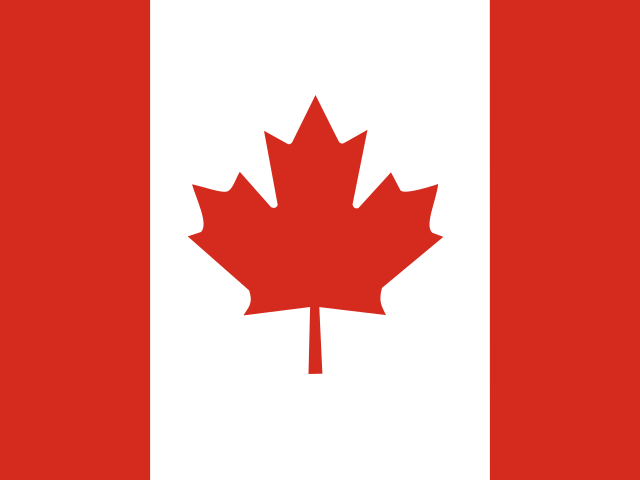
 Canada
Comprehensive education database information
Education System in Canada
Canada is a vast and diverse country located in North America, known for its multicultural society, stunning landscapes, and high standard of living. With a population that values education, Canada has developed a robust education system that reflects its commitment to providing quality learning opportunities for all students. The country is divided into ten provinces and three territories, each with its own educational governance, which allows for a variety of approaches while maintaining high educational standards across the nation.
Overview of the Education System
The Canadian education system is notable for its combination of public and private funding, giving families the flexibility to select schools that align with their preferences and values. While the system is primarily regulated at the provincial level, this structure ensures that educational quality is consistently upheld, regardless of the region.
Primary Education
Kindergarten
- Duration: Children typically attend kindergarten for 1 to 2 years before entering primary school.
- Voluntary Participation: Enrollment in kindergarten is optional, allowing parents to choose whether their children will participate.
Compulsory Schooling
- Starting Age: Education becomes compulsory when children reach the age of 6.
- Primary Duration: Students must complete 6 years of primary education, focusing on foundational skills in literacy, numeracy, and social development.
Secondary Education
Structure
- School Levels: In Canada, there is no separation between middle school and high school; students progress through a continuous system.
- Completion: Most students complete their secondary education after finishing grade 12.
Post-Secondary Pathways
- After high school, students have the opportunity to pursue various pathways, including vocational training or university education.
Academic Year
- The academic calendar typically runs from September to June, although some educational institutions may offer enrollment options in January.
Vocational Education
- Following secondary education, students may opt for vocational training, which emphasizes practical skills relevant to specific careers.
- Programs can vary significantly, ranging from short courses to comprehensive technician and artisan training, generally lasting between 2 to 3 years.
Tertiary Education
Institutions
- Canada is home to a number of esteemed universities and colleges that are recognized for their quality of education.
- While there is no official ranking system for these institutions, students often select schools based on factors such as location and the reputation of particular academic programs.
Diversity of Institutions
- Canada has a total of 36 universities, out of which 8 are privately funded. Additionally, one university located in Montreal offers instruction in French, catering to the linguistic diversity of the country.
Global Recognition
- Canadian degrees are well-regarded worldwide, making the country an attractive destination for international students seeking higher education.
In summary, the education system in Canada is designed to provide high-quality learning experiences for students at all levels. With a strong emphasis on accessibility and diversity, it prepares learners for both local and global opportunities in an increasingly interconnected world.