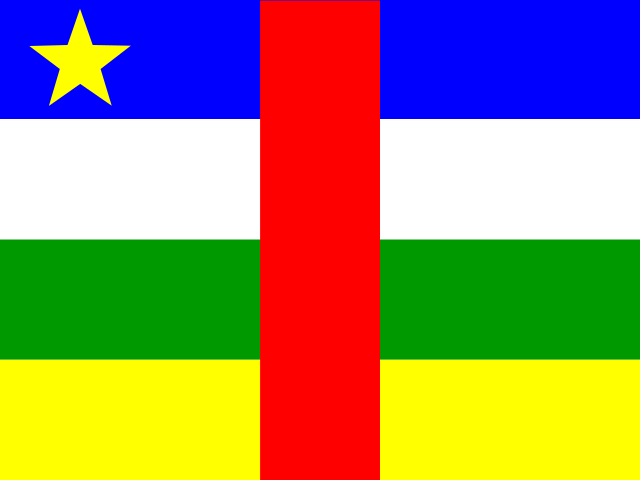
 Central African Republic
Comprehensive education database information
Education System in Central African Republic
Overview of Central African Republic
The Central African Republic (CAR) is a landlocked nation located in the heart of Africa, bordered by the Republic of Congo, Cameroon, Chad, Sudan, and the Democratic Republic of Congo. With a population of approximately 4.4 million, the country faces various socio-economic challenges, reflected in its literacy rate of about 48.6%. The official languages are French and Sangho, with French serving as the primary medium of instruction in schools. The country has a rich history, with human habitation dating back to 1000 BC, and it gained independence from France on August 13, 1960.
Introduction to the Education System
The education system in the Central African Republic is characterized by four main levels: nursery education, primary education, secondary education, and tertiary education. Over the years, this system has been adversely affected by ongoing civil conflicts and public health crises, which have posed significant barriers to educational access and quality.
Education Levels
Primary Education
- Compulsory Education: Education is mandated for children ages 6 to 14, although the enforcement of this law can vary across different regions.
- Language of Instruction: Classes are conducted primarily in French.
- Duration: Primary education lasts for five years, culminating in an assessment that determines students' future educational paths.
- Assessment Outcomes:
- Academic Path: Successful students are eligible to transition into secondary education.
- Vocational Training: Those who do not meet the academic criteria are directed towards vocational training programs.
Middle Education
- Completion of Primary Level: This stage corresponds to middle school, effectively completing the compulsory education requirement.
- Eligibility for Secondary School: Students must pass both primary levels to gain entry into secondary education.
Secondary Education
- Duration: Secondary education extends for an additional three years.
- Educational Streams: Students can choose between two main pathways:
- General Education: This stream leads to a secondary school baccalaureate, qualifying students for university admission.
- Technical and Professional Education: Here, students receive practical training for specific trades and earn proficiency certificates instead of a traditional baccalaureate.
Vocational Education
Vocational training in the Central African Republic is designed with dual objectives:
- Agricultural Training: Programs aim to equip rural communities with skills to grow their own food and potentially sell surplus produce.
- Reintegration of War Veterans: Initiatives are in place to support the reintegration of former soldiers into society, focusing on younger individuals who may have faced significant adversities.
Tertiary Education
- Higher Education Institution: The University of Bangui, established in 1969, is the only institution for higher education in the country.
- Programs Available: The university offers a range of professional training in various fields, including:
- Health Sciences and Medicine
- Teacher Training
- Agriculture
- Business Management
- Faculties: The university is organized into several faculties, which include:
- Health Sciences
- Economics and Management
- Law and Political Science
- Sciences
- Arts and Sciences
- Degrees Offered: Academic programs lead to bachelor’s, master’s, and doctorate degrees.
- Distance Learning: Currently, the University of Bangui does not offer any distance learning options.
In summary, while the educational framework in the Central African Republic is structured and aims to provide opportunities for its youth, it continues to face challenges that affect its implementation and effectiveness.