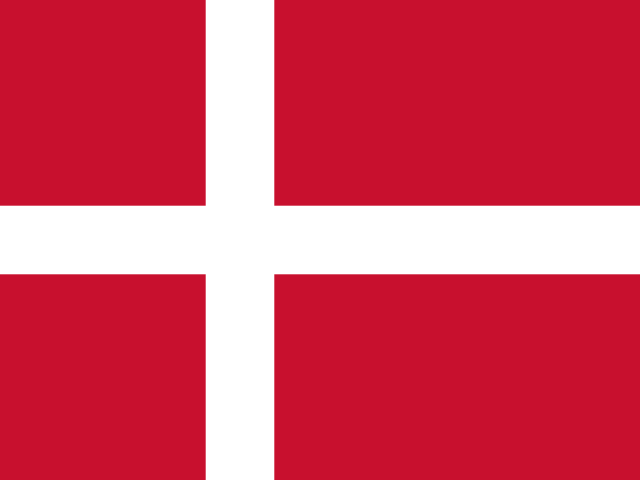
 Denmark
Comprehensive education database information
Education System in Denmark
Denmark, officially known as Kongeriget Danmark, is situated in Northern Europe, bordered by Germany and the Baltic Sea. This Scandinavian nation includes the Faroe Islands as a territory and boasts a population of approximately 5.5 million people. The primary languages spoken are Danish, Faroese, and Greenlandic, with English widely recognized as the predominant second language. Denmark has a rich historical background, characterized by its Viking heritage and significant events that shaped its monarchy and independence. The country has a literacy rate of 99%, reflecting its strong commitment to education.
Overview of the Education System
Denmark's education system is renowned for its compulsory education framework, which mandates schooling for children up to the age of 16. The system emphasizes inclusivity and accessibility, offering education through public schools, known as folkeskole, and private institutions. Following their mandatory education, a substantial percentage of Danish youth—about 82%—pursue further educational opportunities, illustrating the nation's dedication to lifelong learning.
Primary Education
Compulsory Education
- Age Range: Education is obligatory for children aged 6 to 16 years.
- School Types: Students can attend public folkeskole or private schools.
- Educational Structure: The compulsory education is conducted at a single institution, providing a cohesive learning environment throughout the mandatory period.
Leaving Examination
At the conclusion of compulsory education, students are required to take a leaving examination to assess their knowledge and readiness for the next educational phase.
Secondary Education
Denmark offers two main pathways in secondary education:
Gymnasium Program
- Duration: This program lasts for three years.
- Objective: It prepares students academically for higher education institutions.
Vocational Education
- Focus: Designed to equip students with practical skills and competencies tailored for specific careers.
- Structure: The educational format typically involves a 30:70 split between academic learning and hands-on work experience, allowing students to gain real-world insights.
Vocational Education
The Danish government manages adult vocational training, which aims to:
- Enhance Skills: Provide opportunities for individuals to update their professional skills and knowledge.
- Address Labor Market Needs: Tackle any structural gaps within the workforce to ensure a well-prepared labor pool.
- Support Career Advancement: Facilitate professional development for adults seeking to improve their career prospects.
Each year, around 750,000 adults in Denmark participate in vocational training programs, emphasizing the importance of continuous education.
Tertiary Education
Tertiary education in Denmark encompasses multiple levels:
Non-University Tertiary Level
- Duration: Typically offers two-year programs in commercial and technical fields, building upon prior vocational training.
University Studies
Denmark's university system is structured into four main levels:
- Bachelor's Degree: Usually requires three years of study.
- Master's Degree: Follows the completion of a bachelor's degree and typically takes two additional years.
- PhD Programs: These are research-focused and require a master's degree for admission, lasting about three years.
- Doctorates: Advanced academic qualifications awarded after rigorous research and dissertation defense.
The University of Copenhagen, established in 1479, is one of Denmark's leading institutions. It boasts an average enrollment of nearly 40,000 students, with a significant portion being young women. The university is recognized globally, ranked 47th among the top universities worldwide.
Conclusion
Denmark's education system exemplifies a commitment to accessible, high-quality education for all citizens. From compulsory schooling to advanced university studies, the structure is designed to foster academic achievement and personal development. With continual investments in vocational training and a robust tertiary education framework, Denmark prepares its citizens not only for the workforce but also for lifelong learning and adaptability in a dynamic world.