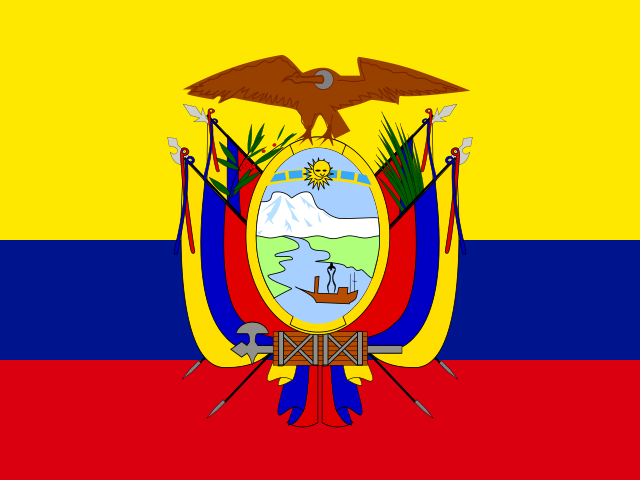
 Ecuador
Comprehensive education database information
Education System in Ecuador
Ecuador, a diverse nation located in South America, has a rich political and cultural history that dates back to the Inca Empire before Spanish colonization. After gaining independence in 1822, Ecuador experienced various political transformations, including boundary disputes with neighboring countries and shifts between civilian and military governments. The education system reflects this complex history, evolving significantly over the decades to address the needs of its population.
Overview of the Education System
Ecuador's education system is designed to provide access to quality education for all citizens, although challenges remain in ensuring equitable access, particularly for indigenous communities. The system is structured to include various levels of education, each catering to different age groups and educational needs.
Education Levels
1. Primary Education
General Basic Education in Ecuador spans 10 years and starts when children are 5 years old. The first year, known as pre-primary education or educación preescolar, is mandatory and serves to prepare children for their formal schooling experience. Following pre-primary, students progress through six years of Primaria, which encompasses grades 1 to 6.
2. Secondary Education
Once students complete primary education, they enter General Unified Education, commonly referred to as the Baccalaureate (Bachillerato) level. This phase lasts for 3 years and is essential for students aiming to pursue higher education or vocational training.
3. Vocational Education
In addition to the traditional Baccalaureate, the education system offers Technical Baccalaureate programs, which also extend over 3 years. These programs integrate general education subjects with specialized courses, particularly in the final year, equipping students with practical skills for the workforce.
4. Tertiary Education
Higher education in Ecuador is characterized by a variety of institutions, with the Universidad San Francisco de Quito being one of the most notable. Established in 1988 as a non-profit organization, this university was created to fill gaps in the educational landscape. It initially offered programs in three main areas:
- Business
- Applied Sciences
- Communications and Culture
Over time, the university has expanded its offerings, providing a broader selection of academic programs. Although it holds a strong reputation within Ecuador, it has yet to achieve significant recognition in international academic rankings.
Conclusion
Ecuador's education system has undergone considerable transformation, particularly since the mid-20th century, as the government has aimed to provide inclusive education for all citizens. While strides have been made, challenges such as teacher shortages and access for indigenous populations remain. Nonetheless, the framework of primary, secondary, vocational, and tertiary education continues to evolve, reflecting the nation's commitment to improving educational outcomes for its diverse population.