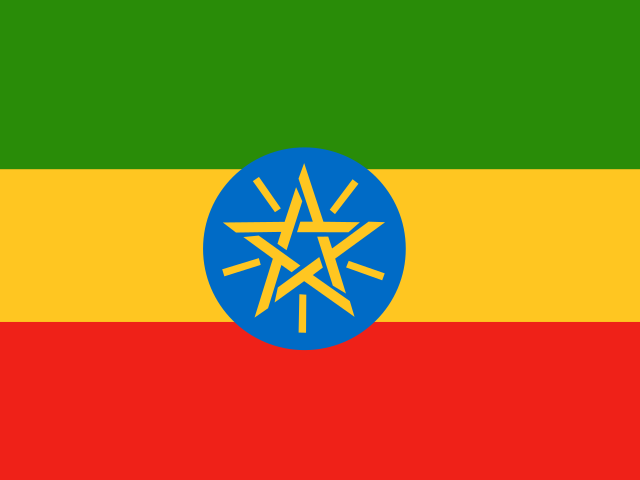
 Ethiopia
Comprehensive education database information
Education System in Ethiopia
Ethiopia, a landlocked nation located on the Horn of Africa, is known for its rich history that spans over two millennia. It holds the distinction of being the oldest independent nation in Africa, having avoided colonization while experiencing a brief occupation by Italy from 1935 to 1941. The country is characterized by its diverse population, with an estimated 76 million residents and over 84 indigenous languages spoken; Amharic, Oromiffa, and Tigrinya being the most prevalent. The literacy rate stands at approximately 42.7%, indicating significant challenges in educational attainment, particularly with only 24% of adults completing primary education. Ethiopia's education system has evolved over centuries, transitioning from church-controlled education to a more secular structure that is accessible to all citizens.
Overview of the Education System
The education system in Ethiopia is organized into various levels, including primary, middle, secondary, vocational, and tertiary education. The academic calendar typically runs from September to July, and education is free at the primary level. However, the system faces challenges such as low enrollment rates, especially for girls, and disparities in educational access between urban and rural areas.
Primary Education
- Age of Entry: Children generally begin their primary education at age 6.
- Duration: Compulsory primary education lasts for eight years, divided into two cycles:
- First Cycle: Basic education covering Grades I to IV.
- Second Cycle: General education covering Grades V to VIII.
- Out-of-School Rate: Approximately 32% of children of official primary school age are not attending school.
- Challenges: The education system grapples with various issues, including:
- Insufficient educational facilities, particularly in rural regions.
- Significant disparities in access and quality between affluent and less affluent populations.
Middle Education
- Duration: Middle school, or lower secondary education, spans four years.
- Age Range: Students typically range from ages 13 to 16.
- Certification: Completion of this stage results in the Ethiopian General Secondary Education Certificate, which is essential for progressing to upper secondary education.
Secondary Education
- Upper Secondary Education: This level begins at age 17 and lasts for two years.
- Concentration Areas: Students can choose to specialize in either:
- Science
- Social Science
- Examinations: At the end of upper secondary education, students must pass the Ethiopian School Leaving Certificate and the Ethiopian Higher Education Entrance Examination, requiring passing grades in a minimum of five subjects.
Vocational Education
- Duration: Vocational programs vary in length from 2 to 3 years.
- Fields of Study: These programs encompass various disciplines, including:
- Teacher training
- Commerce
- Technology
- Agriculture
- Military training
- Certification: Graduates earn either a Technical and Vocational Education Diploma or a Teacher Training College Diploma.
- Career Path: While vocational education prepares students for immediate employment, it does not facilitate access to higher education.
Tertiary Education
- Program Offerings: Tertiary education encompasses several levels, including:
- Teacher's Certificate: Requires one year of study at a teacher training college.
- Diploma/Advanced Diploma: Generally requires 2 to 3 years at specialized institutions in fields such as engineering, technology, health, and agriculture.
- Bachelor's Degree:
- Duration: Typically four years for most disciplines, extending to five years for fields like pharmacy, engineering, and architecture, and six years for medical and veterinary medicine programs.
- Postgraduate Education:
- Master's Degree: Generally requires two years of study after obtaining a bachelor's degree.
- Specialization Diplomas: These typically require three additional years following medical programs.
- Doctoral Degree: Requires three to five years of study following a master's degree.
Enrollment Statistics
- Higher education enrollment has seen significant growth, with undergraduate enrollment at public universities increasing from 34,000 in the 2000/2001 academic year to 125,000 by 2007/2008.
- Women make up nearly 30% of the undergraduate student body and 10% of the graduate population.
Higher Education Oversight
- The Higher Education Relevance and Quality Agency (HERQA) is responsible for monitoring the quality of higher education institutions.
- The University of Addis Ababa, established in 1940, is the oldest university in the country. Currently, there are over 22 federal universities in Ethiopia, with plans for the establishment of an additional ten universities in the near future.
Ethiopia's education system continues to evolve, aiming to enhance access and quality for all citizens, despite existing challenges. The government's commitment to education reform is crucial for fostering a more educated and skilled workforce, essential for national development.