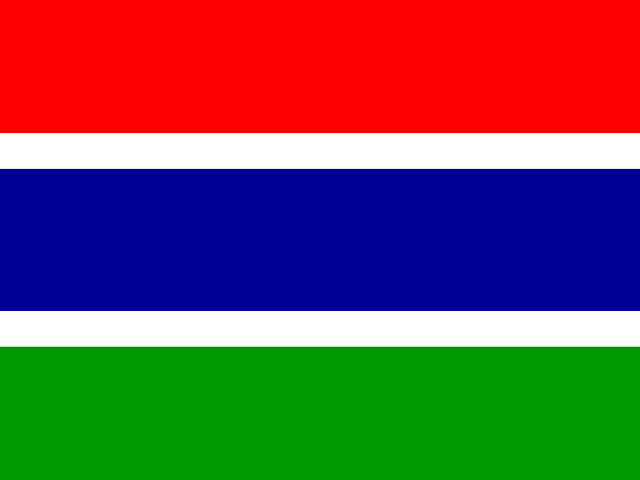
 Gambia
Comprehensive education database information
Education System in The Gambia
The Republic of The Gambia is a small nation located in West Africa, bordered by Senegal on all sides except for its western coastal line along the Atlantic Ocean. The Gambia is characterized by the Gambia River, which flows centrally through the country. With a population of approximately 1.7 million, The Gambia is known for its rich historical significance, including its ties to the transatlantic slave trade and its connection to the literary figure Kunta Kinteh. Despite its historical richness, the country faces challenges, including a literacy rate of about 40.1%.
Overview of the Education System
The education system in The Gambia is designed to provide structured learning opportunities across various levels. It operates under a 6+3+3 system, encompassing six years of primary education, followed by three years of lower secondary education, and concluding with three years of upper secondary education. The system aims to equip students with essential knowledge and skills, culminating in various certification examinations that facilitate their progression to higher education or vocational training.
Education Levels
Primary Education
Lower Basic Education
- Duration: 6 years
- Accessibility: Education at this level is both compulsory and free. However, the availability of facilities can be inconsistent, which may restrict access for some students.
- Assessment: At the conclusion of this phase, students must pass a selection examination to qualify for further educational opportunities.
Middle Education
Upper Basic Education
- Duration: 3 years
- Outcome: Successful students are awarded a Junior School Certificate, which serves as a stepping stone to secondary education.
Secondary Education
Senior Secondary School
- Duration: 3 years
- Accessibility: Access to this level of education is often contingent upon the financial capacity of families to support ongoing education.
- Curriculum:
- Core Subjects:
- English Language
- Mathematics
- Integrated Science
- Social Studies
- Elective Subjects: Students can choose 3 to 4 subjects in specialized areas such as commerce, science, or the arts.
- Core Subjects:
- Assessment: Completion of this stage culminates in the West African Senior Secondary Certificate Examination, which is essential for further academic pursuits.
Vocational Education
Gambian Technical Training Institute
- Established: 1983
- Collaborations: The institute partners with international organizations such as City & Guilds, Pitman Training UK, and the Royal Society of the Arts.
- Program Offerings: The institute has expanded its curriculum to include over 60 vocational courses across various fields, catering to diverse career aspirations.
Tertiary Education
Gambia College
- Focus: Offers non-degree programs in several disciplines, including:
- Agriculture
- Science
- Nursing and Midwifery
- Education
- Catering
- Management
University of The Gambia
- Established: 1999
- Programs Offered:
- Undergraduate degrees in fields such as Humanities & Social Studies, Economics & Management Science, and Nursing and Public Health.
- Specialized 6-year programs in Medicine and Surgery.
- Future Development: A comprehensive development plan is underway to enhance the university's offerings and infrastructure.
Conclusion
The Gambian education system, while progressive in its structure, faces several challenges related to accessibility, quality, and resource allocation. With continued efforts to improve educational facilities and expand opportunities, The Gambia aims to enhance literacy rates and equip its youth with the skills needed for a dynamic workforce. The commitment to education remains crucial for the nation’s growth and development as it navigates the complexities of modern challenges.