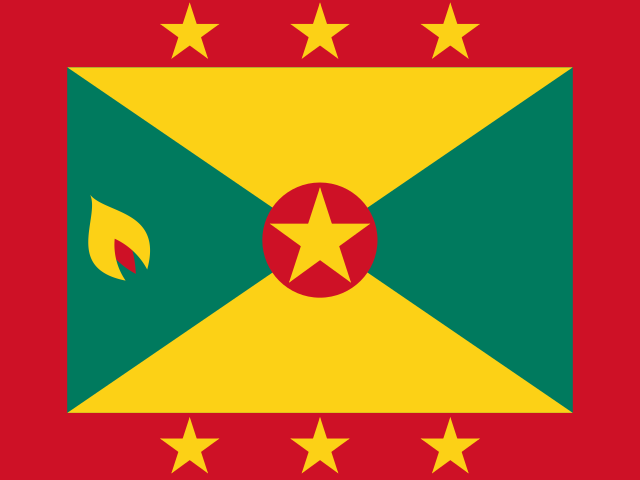
 Grenada
Comprehensive education database information
Education System in Grenada
Grenada, an enchanting Caribbean nation comprising three islands—Grenada, Carriacou, and Petite Martinique—is located north of Trinidad and Tobago, nestled between the Caribbean Sea and the North Atlantic Ocean. The country has a population of approximately 90,343 residents, and it boasts an impressive literacy rate of 96%. While English serves as the official language and the primary medium of instruction, Grenadian Creole is commonly used in everyday communication. The demographic composition reflects a rich history, with about 80% of the population being descendants of African slaves, and approximately 12% tracing their ancestry to indentured Indian laborers. The education system in Grenada is managed by the Ministry of Education, Human Resource Development, and the Environment, making education compulsory for children between the ages of 5 and 16.
Overview of the Education System
Grenada's education framework mirrors the British system and encompasses various stages, including primary, secondary, vocational, and tertiary education. The structure is designed to provide students with a comprehensive educational experience aimed at fostering both academic and practical skills.
Primary Education
Key Features
- Compulsory and Free: Education is mandated by law to be both free and compulsory for children aged 6 to 14.
- Entry Age: Children typically begin their primary education at the age of 5.
- Challenges in Attendance: Factors such as poverty and the seasonal nature of agricultural work lead to significant absenteeism in schools.
- Assessment for Progression: At the end of 6 years of primary schooling, students are required to pass a common entrance examination to progress to lower secondary education.
Secondary Education
Structure
Middle Education
- The initial segment of secondary education encompasses three years (grades 7 to 9), often referred to as middle school.
- Students who opt not to pursue further education upon completing this phase are awarded a school-leaving certificate.
Higher Secondary Education
- Students who wish to continue their education can enter a higher secondary phase, which lasts for an additional 2 years.
- At the conclusion of this phase, students may sit for either the Caribbean General Certificate of Education or the Cambridge GCE.
Vocational Education
- Although Grenada’s education system primarily emphasizes academic pursuits, there is a growing governmental initiative to enhance vocational education offerings.
- Current efforts aim to revise curricula to incorporate vocational subjects such as arts, crafts, sports, and tourism to better align educational outcomes with national skills requirements.
Tertiary Education
-
The foremost institution for higher education in Grenada is the T.A. Marryshow Community College (TAMCC). This college provides opportunities for students to:
- Complete foundational years of university degrees.
- Enroll in 2- and 3-year programs in various fields, including nursing and pharmacy.
- Pursue their GCE advanced levels.
-
St. George’s University is another prominent institution, offering full bachelor's degrees in diverse disciplines such as arts, veterinary science, medicine, and general sciences.
-
Additionally, the University of West Indies Distance Education Center provides further educational opportunities for those seeking flexibility in their studies.
In summary, Grenada's education system is robust, structured to meet the needs of its population while also evolving to address contemporary challenges and opportunities. Through a combination of academic and vocational training, the system aims to equip students with the skills necessary for both personal and professional success.