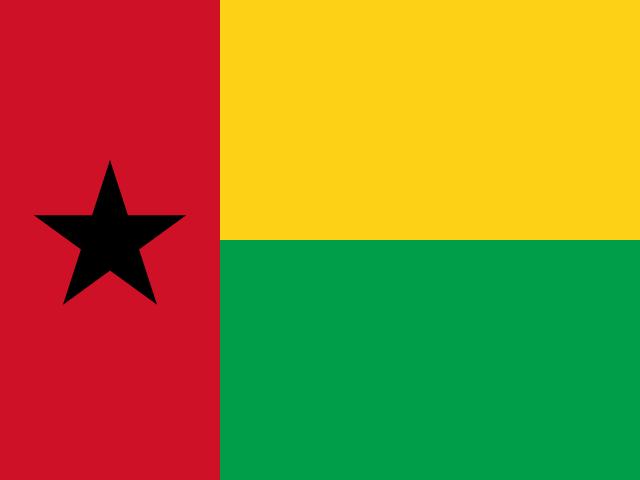
 Guinea-Bissau
Comprehensive education database information
Education System in Guinea-Bissau
Overview of Guinea-Bissau
Guinea-Bissau, officially known as the República da Guiné-Bissau, is situated in Western Africa along the North Atlantic coast. The country shares its borders with Guinea to the south and Senegal to the north, covering an area of approximately 36,120 square kilometers. The capital city is Bissau, which is also one of the nine regions that make up the country: Bafata, Biombo, Bolama, Cacheu, Gabu, Oio, Quinara, and Tombali.
As of the last census in 2009, Guinea-Bissau has a diverse population of around 1.5 million people. The religious landscape is primarily composed of indigenous beliefs (50%), Islam (40%), and Christianity (10%). The nation has encountered significant educational challenges, reflected in a literacy rate of merely 53.9% as of 1997. To address this, Guinea-Bissau is one of the countries participating in the UNESCO Literacy Initiative for Empowerment (LIFE), aimed at enhancing literacy rates as part of the United Nations Literacy Decade (2003-2012).
Portuguese is the official language of Guinea-Bissau, while Crioulo—a mix of Portuguese and various West African languages—serves as the national language. This linguistic situation has created a unique dynamic in education, where the medium of instruction is Portuguese, despite it not being the first language for most students. The current educational framework adheres to the National Plan for Action: Education for All, which was structured in three stages from 2003 to 2015, with the Ministry of National Education overseeing all educational levels.
Introduction to the Education System
The educational landscape in Guinea-Bissau is characterized by significant challenges that affect both access and the quality of education at all levels. The system is designed to promote educational advancement; however, various socio-economic factors hinder effective implementation and widespread participation.
Primary Education
Structure and Duration
- Compulsory Education: Education is mandated for children between the ages of 7 and 14.
- Enrollment Figures:
- Around 55% of children are enrolled in basic education.
- Only 25% progress to complete the additional two years of complementary education.
Challenges
The high dropout rates in primary education contribute to elevated levels of adult illiteracy, especially among women. This directly impacts the overall educational attainment and socio-economic development of the country.
Secondary Education
Duration and Progression
- Students who perform well in primary education may continue their studies for an additional five years at the secondary level.
Issues Faced
- Scarcity of Facilities: Educational institutions are limited, particularly in remote rural areas.
- Teacher Training: Many educators in these regions lack adequate training, leading to subpar educational outcomes.
Implications
The educational framework often fails to provide the necessary resources and quality of instruction needed for the population, particularly in underserved areas.
Tertiary Education
Institutions
- Two universities were established in 2003 in Bissau:
- Amilcar Cabral University: Currently inactive due to issues with financial management.
- University of Colinas de Boe: Offers limited information about its programs and operations.
Degrees Offered
- The University of Colinas de Boe provides bacharelato degrees after three years and licenciaturas after five years of study.
Additional Training Opportunities
The education system also encompasses institutions for teacher training, vocational education, and nursing programs, aiming to enhance professional skills and competencies among the workforce.
Conclusion
In summary, the education system in Guinea-Bissau is structured to promote learning at various levels but faces numerous challenges that impede its effectiveness. Addressing issues such as low enrollment rates, inadequate facilities, and insufficient teacher training is critical to improving educational outcomes and fostering a more literate society. As the country continues to navigate its educational reforms, a concerted effort is required to ensure that all citizens have access to quality education.