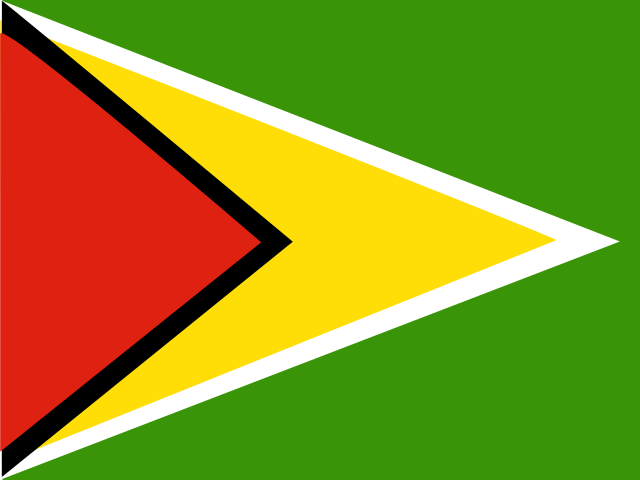
 Guyana
Comprehensive education database information
Education System in Guyana
Guyana, located on the northeastern coast of South America, is a nation rich in history and cultural diversity. Originally inhabited by the indigenous Carib and Arawak peoples, the region saw European exploration beginning with the Spanish in the late 16th century. The Dutch established the first colonies in the early 17th century, only to be succeeded by British rule in the late 18th century. Guyana gained independence from the United Kingdom on May 26, 1966, and today, it is known for its multicultural society and rich natural resources. The Ministry of Education in Guyana oversees the educational framework, which is designed to provide free and compulsory education from early childhood through secondary levels.
Overview of the Education System
The education system in Guyana is structured to ensure that all children receive a quality education from early childhood through to secondary education. This framework aims to equip students with the necessary skills and knowledge to prepare them for future endeavors, whether in higher education, vocational training, or the workforce.
Primary Education
- Compulsory Age: Education is mandated for children aged 5 years and 7 months to 16 years.
- Duration: The primary education cycle lasts for 6 years (Grades 1-6).
- Examinations: Students are assessed through examinations every two years.
- Curriculum Focus: The primary curriculum emphasizes the development of basic literacy and numeracy skills, along with foundational knowledge in societal studies and science.
Secondary Education
Guyana's secondary education is divided into different types of institutions:
- Types of Secondary Schools:
- Community High Schools: These schools offer a 4-year program that includes academic, vocational, and occupational courses. Students take the Secondary School Proficiency Examination (SSPE) at the end of this period.
- General Secondary Schools: Providing a 5-year program, these schools prepare students for the Caribbean Examinations Council (CXC) Secondary Education Certificate or the General Certificate of Education Ordinary Level (GCE O-Level) examinations at the conclusion of their studies. Students may continue into a 2-year program to prepare for the Caribbean Advanced Proficiency Examination (CAPE).
Post-Secondary Education
Guyana offers a range of post-secondary options for students:
- University of Guyana: Established in 1963, this institution is the only university in the country. It offers various programs, including 2-year certificate and diploma courses, as well as bachelor’s and master’s degrees. Admission requires 5-6 passes on the CXC or GCE O-Level exams, plus satisfactory results on the University of Guyana Entrance Examination (UGEE).
- Specialized Institutions: Other options include the Guyana School of Agriculture, which offers certificate and diploma programs, and the Cyril Potter College of Education, where future teachers are trained.
- Nursing Schools: Several schools also provide training for aspiring nurses.
Teacher Training
Teacher education in Guyana is conducted primarily at the Cyril Potter College of Education, where:
- Pre-Primary and Primary Teacher Training: This program spans 2 years and requires candidates to have 4 passes on the CXC or GCE O-Level exams.
- Secondary School Teacher Training: This program is 3 years long and also requires the same examination passes. Graduates receive the Trained Teacher's Certificate upon completion.
Vocational Education
- Regulatory Authority: The Council for Technical and Vocational Training and Education is responsible for overseeing vocational education in Guyana.
- Roles and Responsibilities: The council sets standards for vocational training and evaluates the performance of private colleges and schools that offer vocational programs.
Tertiary Education
Guyana's tertiary education landscape includes:
- Technical and Vocational Institutions: Approximately 10 technical and vocational schools operate at this level.
- Funding Sources: While many of the leading institutions receive government support, there are also private entities that contribute to the educational sector.
- University of Guyana Campuses: The university has campuses in Tain and Demerara, aiming to reduce the costs associated with overseas education. Despite the availability of local programs, many students still seek distance learning opportunities or pursue studies abroad.
In conclusion, the education system in Guyana is designed to provide comprehensive learning opportunities for all students, with a strong emphasis on both academic and vocational training to prepare them for the demands of the modern world.