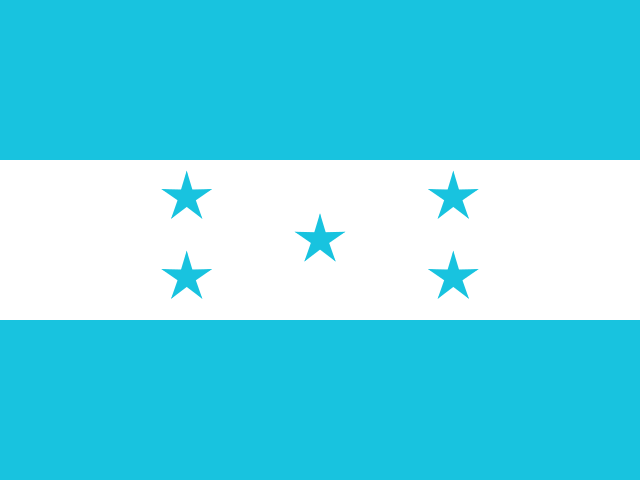
 Honduras
Comprehensive education database information
Education System in Honduras
Honduras, a Central American nation that gained independence in 1821, is bordered by El Salvador, Guatemala, and Nicaragua. With a population of approximately 6.67 million, it is characterized by a young demographic, a median age of under 19 years, and high poverty levels, with around 84% of its citizens living below the poverty line. Despite political stability since the 1980s, the country faced significant challenges, including the devastation caused by Hurricane Mitch in 1998, which led to a comprehensive reform of its educational system aimed at rebuilding and enhancing the quality of education.
Overview of the Education System
The education system in Honduras is overseen by the Secretaría de Educación and is designed to provide compulsory education up to the 9th grade, which corresponds to the end of lower secondary education. Following the reforms initiated after Hurricane Mitch, the system has been structured into several distinct educational levels, each with specific goals and challenges.
Education Levels in Honduras
Primary Education
Primary education in Honduras consists of six years of free schooling aimed at children typically aged 6 to 12. However, the system struggles with significant challenges:
- Completion Rates: Less than 32% of students complete primary education without repeating grades.
- Survival Rates: Only about 50% of students who initially enroll complete this phase.
- Time to Completion: On average, it takes students 9.4 years to finish primary education due to grade repetition and other barriers.
Secondary Education
Honduran secondary education also spans six years and is provided at no cost. The secondary education system consists of two distinct tracks:
- Academic Track: Focuses on humanistic and scientific studies, preparing students for higher education.
- Technical/Professional Track: Offers vocational training in various fields, including:
- Agricultural Education: Specializations like horticulture, aquaculture, and coffee production.
- Industrial Education: Fields such as electricity, electronics, and auto mechanics.
- Administrative Services: Programs in marketing, computer technology, and tourism.
Despite its importance, secondary education faces similar challenges as primary education:
- High rates of grade repetition hinder overall completion rates.
- The quality of education can vary significantly, often influenced by geographical location.
Vocational Education
Vocational education in Honduras is facilitated by the Honduran National Vocational Training Institute, which operates independently yet maintains connections with government bodies and the business sector. Key aspects include:
- Skill Development: Focuses on enhancing the skills of the workforce to contribute to national productivity and economic growth.
- Access to Training: Provides opportunities for students to receive practical training that aligns with labor market needs.
Tertiary Education
Honduras features 11 universities, comprising a mix of public, private, and religious institutions. Noteworthy elements of the tertiary education system include:
- Urban Concentration: Most universities are situated in urban centers such as Tegucigalpa, San Pedro Sula, and Comayagüela, which can limit access for students in rural areas.
- University Reputation: The Universidad Tecnológica Centroamericana is recognized for its strong reputation among higher education institutions.
The transition into higher education typically follows the completion of secondary education and is characterized by various degree programs, including bachelor's degrees and professional qualifications that can take four to five years to complete.
Teacher Training
Teacher education in Honduras is conducted at both secondary and post-secondary levels:
- Primary School Teachers: Trained at Escuelas Normales, where they receive a Maestro de Educación Primaria qualification after three years of specialized training.
- Secondary School Teachers: Educated at institutions like the Escuela Superior del Profesorado and the Universidad Pedagogica Nacional, where they earn the Título de Profesor after four years of study.
In recent years, reforms have aimed to enhance teacher qualifications, allowing for simultaneous certification as teachers and earning of academic degrees.
Conclusion
Honduras’ education system has undergone significant reforms aimed at addressing historical challenges and improving the quality of education. While strides have been made since the devastating impact of Hurricane Mitch, ongoing issues such as high dropout rates, variations in educational quality, and access to higher education continue to pose challenges that need to be addressed to foster a more equitable and effective educational environment for all Hondurans.