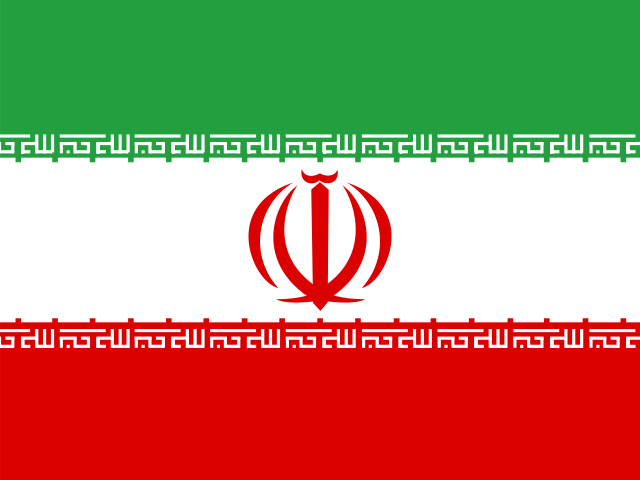
 Iran
Iran
Comprehensive education database information
Education System in Iran
Iran, officially known as the Islamic Republic of Iran, is the 16th largest country globally, covering an area of approximately 1,648,195 square kilometers. Located in Southwest Asia, it shares borders with several countries, including Armenia, Azerbaijan, Turkmenistan, Afghanistan, Pakistan, Iraq, and Turkey, as well as coastlines along the Caspian Sea, Oman Sea, and the Persian Gulf. With a population of around 68 million, Iran boasts one of the youngest demographics in the world. The official language is Persian (Farsi), although various regional languages such as Turkish, Arabic, and Kurdish are also spoken. Islam is the predominant religion, with nearly 99% of the population adhering to the faith, primarily of the Shia sect.
The educational framework in Iran has evolved significantly over the years, beginning with the introduction of primary education following the first constitutional reforms in 1906. The Ministry of Education was established in 1910 to oversee the development of public education. The first secondary schools were introduced in 1925, and higher education institutions, including the University of Tehran, were established shortly thereafter. Following the Islamic Revolution in 1979, substantial changes were made to the educational system, including the Islamization of curricula and the segregation of schools by gender. Today, the education system is overseen by both the Ministry of Education and the Ministry of Science, Research, and Technology.
Overview of the Education System
The Iranian education system is divided into several distinct levels: primary, secondary, vocational, and tertiary education. The government prioritizes education, allocating a significant portion of the national budget—approximately 42%—to enhance educational access, particularly in rural regions.
Primary Education
- Compulsory and Free: Education is provided free of charge at state secondary schools and is mandatory up to grade 9.
- Pre-School Education: The educational journey begins with a one-year pre-school program designed to prepare children for primary education.
- Primary School Structure: Children progress through grades 1 to 6 in primary school, with a national examination at the conclusion of this stage to determine eligibility for middle school.
Secondary Education
- Duration: Secondary education lasts for three years, encompassing grades 7 to 9 (lower secondary) and grades 10 to 12 (upper secondary).
- Streams of Study: Students can select between academic and vocational tracks:
- Academic Streams include:
- Literature and Humanities
- Mathematics and Physics
- Social Sciences
- Experimental Sciences
- Vocational Education offers options such as:
- Agriculture
- Business and Trade
- Technology
- Academic Streams include:
Vocational Education
- Oversight: The Technical and Vocational Organization is responsible for vocational education in Iran.
- Training Facilities: Vocational training is available through 600 designated centers and mobile classrooms to reach broader communities.
- Private Institutions: Over 14,000 private vocational institutions have been authorized to provide skill development, contributing to the nation's economic goals of advancing to a first-world status.
Tertiary Education
- Entrance Requirements: Students aspiring to attend university must pass a national entrance examination, which assesses knowledge across various subjects.
- Higher Education Institutions: Successful candidates can enroll in a range of institutions, such as:
- Universities
- Technical Institutes
- Medical Schools
- Community Colleges
- Degree Programs:
- Diploma: Typically awarded after 2 years of study.
- Bachelor's Degree: Achievable after 4 years of academic work.
- Master's Degree: Requires an additional 2 years beyond the bachelor’s level.
- Doctorate: Students may pursue doctoral studies following the completion of their master's degree.
Conclusion
The education system in Iran reflects the country's commitment to enhancing educational opportunities for its youth, adapting to the needs of a changing society while maintaining a focus on Islamic values. Through various reforms and the establishment of multiple educational pathways, Iran aims to equip its young population with the necessary skills and knowledge to contribute to both national development and the global community.