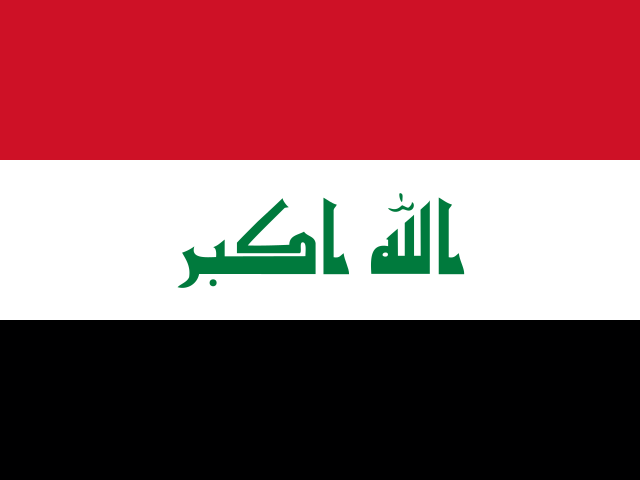
 Iraq
Iraq
Comprehensive education database information
Education System in Iraq
Iraq, officially known as the Republic of Iraq, is situated in the Middle East and shares borders with several countries, including Turkey, Iran, Kuwait, Saudi Arabia, Jordan, Syria, and the Persian Gulf. With a population of approximately 28.2 million, the demographic composition includes roughly 75-80% Arabs, 15-20% Kurds, and smaller groups of Turkomen, Assyrians, and others. The country recognizes Arabic and Kurdish as its official languages, with additional languages such as Turkoman, Assyrian, and Armenian spoken in various regions. The literacy rate in Iraq stands at about 74.1%. Historically, this region was part of ancient Mesopotamia, known as the cradle of civilization, and has experienced a tumultuous past marked by various empires, invasions, and conflicts.
Overview of the Education System
Iraq's education system has historically been recognized for its quality, with literacy rates approaching 100% in the past. However, the educational landscape has been severely affected by over a decade of conflict and violence. The destruction of educational infrastructure and the tragic loss of educators have created substantial challenges. Furthermore, the ongoing tensions between fundamentalist beliefs and the principles of accessible education have made it increasingly difficult to provide quality learning opportunities, particularly for marginalized communities.
Primary Education
- Primary education in Iraq is officially compulsory and is intended for children aged 6 to 11.
- The primary schooling system is currently grappling with the repercussions of war and instability.
- Numerous schools have been damaged or destroyed, resulting in a critical shortage of educational facilities.
- Primary school-age girls, especially in economically disadvantaged areas, face significant barriers to education, including:
- Child labor within families, which detracts from their ability to attend school.
- A severe lack of basic educational resources and facilities.
Secondary Education
- Upon completing primary education, students typically progress to secondary school; however, the environment in state-run secondary institutions is often discouraging.
- Many students, particularly boys from urban settings, encounter challenges such as:
- A deficit of qualified teachers leading to inadequate educational experiences.
- Insufficient support for teaching staff, resulting in high failure rates among students, despite the lowering of academic standards.
- The current scenario necessitates extensive reforms in teacher training and support systems to improve educational outcomes.
Tertiary Education
-
Iraq is home to 24 universities, which vary significantly in quality, ranging from poor to excellent. These institutions include:
- Public universities funded by the state.
- Religious institutions that cater to specific ideological beliefs.
- Branches of international universities offering diverse programs.
-
One of the notable institutions is the University of Baghdad, founded in 1956. This university absorbed the Mustansiriya University, established as early as 1233. The University of Baghdad has faced numerous challenges, including:
- Damage caused by military conflicts.
- Disruptions due to student protests, particularly highlighted in 2007.
- An ongoing struggle to recover from the psychological and physical traumas induced by these events.
Conclusion
The education system in Iraq is at a crossroads, facing formidable challenges that require urgent attention and reform. While the nation has a rich educational heritage, the current climate necessitates a concerted effort from all stakeholders to rebuild and enhance the quality of education. This includes addressing infrastructure needs, ensuring teacher training and support, and fostering an environment where every child has the opportunity to learn and thrive.