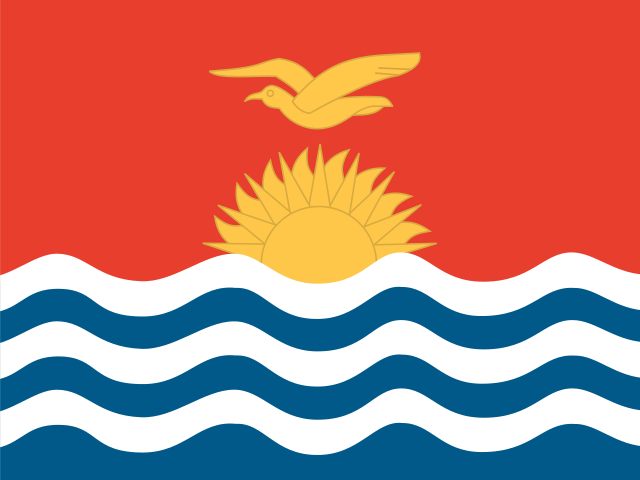
 Kiribati
Comprehensive education database information
Education System in Kiribati
Kiribati is a nation comprised of 33 islands and atolls located in the central Pacific Ocean. With a population of approximately 120,000, the country faces unique challenges related to its geography, including climate change and limited resources. The culture of Kiribati is rich and heavily influenced by a blend of traditional practices and modern influences, particularly through Christianity, which plays a significant role in the daily lives of the people.
Overview of the Education System
The education system in Kiribati has evolved significantly since the establishment of the first formal schools by Christian missionaries. Today, this system is managed by the Ministry of Education, Training and Technology (METT), which oversees various educational institutions ranging from primary to tertiary levels. The METT also coordinates non-formal education initiatives, ensuring a holistic approach to learning that caters to the diverse needs of the population.
Levels of Education
Primary Education
- Duration: 6 years
- Age Range: 6 to 12 years
Primary education in Kiribati serves as the foundation of the educational journey, beginning at age six. Students engage in basic literacy and numeracy skills, alongside subjects that include science, social studies, and arts. The completion of primary education is crucial for progression to secondary education.
Secondary Education
Lower Secondary Education
- Duration: 3 years
- Age Range: 13 to 15 years
Lower secondary education follows primary education and typically lasts for three years. At the end of this stage, students take examinations to obtain the Kiribati Junior School Certificate. This certification is a prerequisite for advancement to upper secondary education.
Upper Secondary Education
- Duration: 3 years
- Age Range: 16 to 18 years
Upper secondary education is divided into three forms (Forms 4, 5, and 6) and offers a mix of academic and vocational courses. Students must pass the Common Entrance Examination to enroll in upper secondary schools. Upon completion, students can earn either the Kiribati National Certificate or the Pacific Senior Secondary Certificate, both of which facilitate entry into higher education institutions such as the University of the South Pacific in Fiji. Additionally, some schools provide a Form 7 option, allowing graduates to directly enter university.
Post-Secondary Education
Post-secondary education in Kiribati includes various technical and vocational training programs, as well as teacher training. Institutions such as the Tarawa Teachers’ College, Tarawa Technical Institute, Marine Training Center, and Tungaru Nurse Training School are key providers of higher education. These institutions prepare students for diverse career paths, contributing to the development of skilled professionals in the country.
Conclusion
The education system in Kiribati is a reflection of the nation's commitment to fostering knowledge and skills among its citizens. With a structure that supports learning from primary through post-secondary levels, the system aims to equip students with the competencies necessary for personal and professional success. Despite the challenges faced, the dedication of educators and the involvement of the Ministry of Education, Training and Technology, alongside community support, continue to enhance educational opportunities throughout the islands.