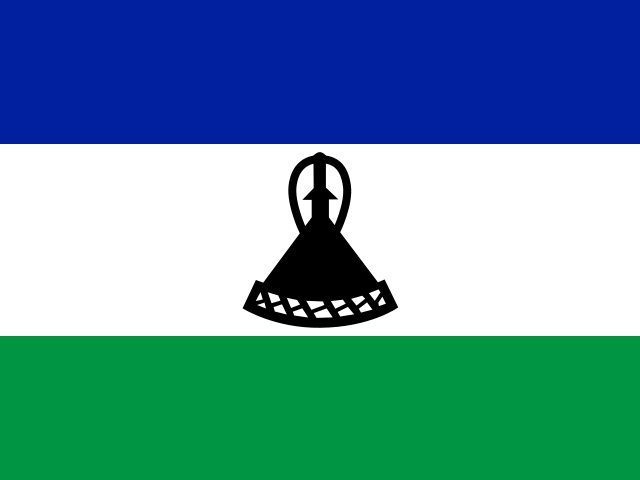
 Lesotho
Comprehensive education database information
Education System in Lesotho
Lesotho, known as the Kingdom of Lesotho, is a small enclave located in southern Africa, entirely surrounded by South Africa. The country features a predominantly mountainous landscape, with over 80% of its territory situated at elevations exceeding 1,000 meters. With a population exceeding 2 million residents, Lesotho boasts a literacy rate of approximately 84.8%, one of the highest in the African continent. The official languages spoken are Sesotho and English.
Overview of the Education System
The education system in Lesotho has undergone substantial reforms aimed at improving both accessibility and the quality of education available to its citizens. The government has implemented policies to ensure that education is both free and compulsory for children, fostering a more educated population.
Primary Education
Primary education in Lesotho is characterized by the following key elements:
- Duration: Children typically begin their primary education at age 6, which lasts for a total of 7 years.
- Early Childhood Care: Prior to starting primary school, children have the opportunity to engage in early childhood care programs, which help prepare them for formal education.
- Examinations: At the conclusion of primary education, students must take an external examination to earn the Primary School Leaving Examination Certificate.
In 2010, legislation was enacted to provide free education for all citizens, a significant step towards enhancing educational access.
Secondary Education
Lesotho's secondary education system comprises approximately 256 schools, with more than 90% of these institutions being church-affiliated. Here are some notable aspects of secondary education:
- Structure: Secondary education is divided into two levels:
- Lower Secondary: Lasts for 3 years, culminating in the Junior Certificate Examination.
- Upper Secondary: Extends for an additional 2 years, after which students take the Lesotho General Certificate of Secondary Education.
Despite these provisions, challenges remain in terms of student attendance and retention:
- Historically, less than 50% of eligible students have pursued high school education.
- The introduction of free education raises concerns regarding the system's ability to manage an increased number of students.
- Many students are likely to exit the education system after completing 8th grade to enter the workforce, with only a small percentage expected to qualify for university.
Vocational Education
For students interested in acquiring practical skills, Lesotho offers a robust technical and vocational education stream. Key features include:
- Duration: The vocational program lasts for 3 years and is available to students who have completed grade 8.
- Objective: The aim is to equip students with the necessary skills for further technical training at the tertiary level, preparing them for various career paths.
Tertiary Education
Lesotho's tertiary education landscape is shaped by several key institutions, including:
- Lesotho Agricultural College
- National University of Lesotho
- University’s International School
The National University of Lesotho, established in 1975 in the Roma Valley near the capital city of Maseru, offers a wide array of academic programs across various faculties, including:
- Agriculture
- Education Sciences
- Health
- Law
- Social Sciences
- Science & Technology
- Humanities
This university is recognized for its international accreditation, which enhances its reputation and attractiveness to both local and international students.
Conclusion
The education system in Lesotho reflects the country's commitment to improving educational access and quality for its citizens. Through ongoing reforms and a focus on both primary and secondary education, as well as vocational and tertiary opportunities, Lesotho aims to foster a more educated and skilled population capable of contributing to the nation's development.