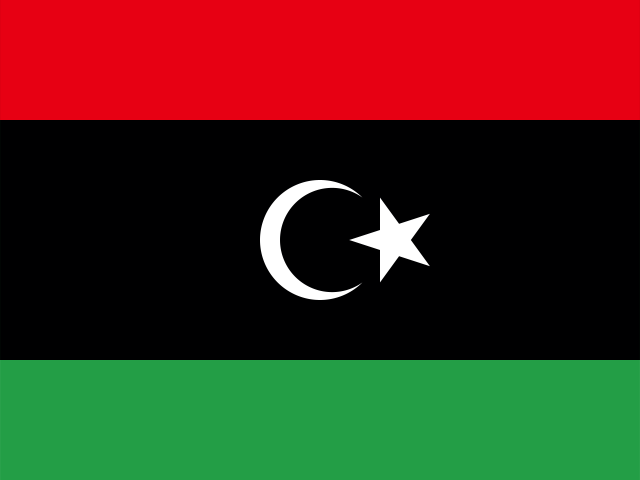
 Libya
Libya
Comprehensive education database information
Education System in Libya
Libya, located in North Africa, became an independent nation on December 24, 1951, under the auspices of the United Nations. Initially established as a constitutional monarchy, Libya was ruled by King Idris, who faced increasing political pressures and challenges as the country experienced rapid changes following the discovery of oil in 1959. This discovery brought significant wealth, primarily benefiting the elite, while the broader population faced social unrest. Despite these challenges, Libya has made strides in various sectors, including education.
Education in Libya is characterized by being free at all levels, including university education, with Arabic as the primary language of instruction. The system mandates eight years of compulsory education, commencing at age seven, and offers options for early childhood education.
Education Levels
The Libyan education system is divided into several key stages including primary, middle, secondary, vocational, and tertiary education. This structure aims to provide comprehensive educational opportunities, balancing academic learning with vocational training.
Primary Education
- Duration: The first nine years of education are both compulsory and free for all students.
- Structure: The program begins with six years of primary schooling.
- Curriculum: The subjects taught during this stage include:
- Arabic Language
- Islamic Studies
- Jamahiriya Society
- Mathematics
- Natural Sciences
- History
- Geography
- Arts
- Music
- Technical and Physical Education
Middle Education
- Duration: The final three years of basic education take place in middle schools.
- Certification: At the end of this stage, students are awarded a Basic Education Certificate.
- Post-Certification Options: Graduates have the opportunity to:
- Enter the workforce directly
- Continue their education by enrolling in secondary school
Secondary Education
- Duration: Secondary education spans grades ten to twelve.
- Curriculum Options: Students can choose between:
- Science Track: Focusing on STEM subjects
- Arts Track: Emphasizing humanities and social sciences
- Purpose: This level is designed to prepare students for higher education.
- Alternative Path: Students may also enroll in a Technical Secondary School, which offers four-year programs in fields such as:
- Economics
- Arts and Media
- Biology
- Engineering
- Social Sciences
Vocational Education
- Eligibility: Vocational education is accessible to students who do not complete the nine years of basic education.
- Program Availability: There are over 44 vocational programs available, covering various fields such as:
- Electrical and Mechanical Engineering
- Carpentry and Construction
- Architecture
- Agriculture
- Marine Fishing
- Female-specific vocations
Tertiary Education
- Institutions: Tertiary education in Libya is offered through:
- General and specialized universities
- Polytechnics
- Higher institutes
- Teacher training colleges
- Universities: Libya boasts eight universities, with the University of Libya established in 1955 as the first. This institution later facilitated the formation of the University of Benghazi (Garyounis) and the University of Tripoli (Al Fateh) in 1973.
- Open University: An Open University based in Tripoli functions with 16 branch campuses across the country, providing additional educational avenues for students.
In conclusion, Libya's education system is structured to promote inclusivity and access to education for all citizens, emphasizing both academic and vocational training to prepare students for future challenges.