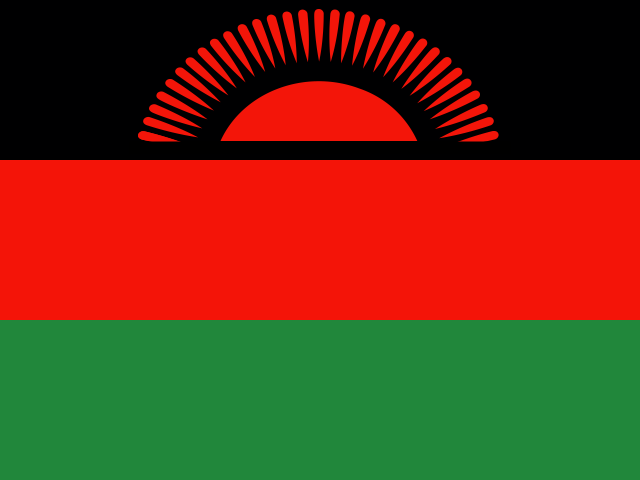
 Malawi
Comprehensive education database information
Education System in Malawi
Overview of Malawi
Malawi is a landlocked nation located in southern Africa, bordered by Zambia, Tanzania, Mozambique, and Lake Malawi. With a population of approximately 13.9 million, the country has a literacy rate of around 62.7%. The official languages are English and Chichewa. Historically, Malawi was inhabited by the Khoisan tribe, with the Chewa people establishing the Maravi kingdom in the 16th century. The British declared a protectorate in the area in 1891, known as Nyasaland, before Malawi gained independence in 1964. Today, the Ministry of Education, Science, and Technology oversees the education sector in Malawi, which is structured to provide foundational education to its citizens.
Introduction to the Education System
The education system in Malawi is designed to cater to various educational stages, including Primary Education, Secondary Education, Vocational Education, and Tertiary Education. Each stage is essential for fostering student development and preparing a skilled workforce for the country's future.
Primary Education
Compulsory Education
- Duration: Primary education is mandatory for 8 years.
- Age of Entry: Children typically begin their primary education at age 6.
Language of Instruction
- The first four years of primary education are conducted in a local traditional language, allowing students to build a strong linguistic foundation.
- From the fifth year onward, English becomes the primary medium of instruction, reflecting the nation's official language.
School Types
Primary schools in Malawi can be categorized into two main types:
- State-controlled schools managed by the government.
- Privately operated schools, often affiliated with religious missions.
Secondary Education
Structure and Duration
Secondary education encompasses a total of 4 years of study, divided into two segments:
- Lower Secondary Education: The first two years focus on foundational subjects.
- Upper Secondary Education: The subsequent two years delve deeper into specific subjects.
School Environment
Many secondary institutions serve as boarding schools, promoting discipline among students, which is often reinforced by a uniform policy.
Examinations
- At the end of the first two years, students take the Malawi Junior National Certificate examination.
- Upon completing secondary education, students must pass the Malawi School Certificate of Education examination to qualify for university admission.
Vocational Education
Vocational education in Malawi is governed by the Technical, Entrepreneurial and Vocational Training Authority. The authority aims to:
- Cultivate a sustainable workforce that meets the demands of various industries.
- Foster economic growth through specialized training programs.
Tertiary Education
Access and Admission
Tertiary education in Malawi is highly competitive, primarily due to a shortage of classroom space. While only a limited number of candidates gain entry into universities, others may pursue studies at:
- Teachers training colleges
- Technical institutions
Universities
Malawi has several higher education institutions, including three major universities:
- Catholic University
- Mzuzu University
- University of Malawi, established in 1964, which includes several constituent colleges:
- Chancellor College
- Bunda College of Agriculture
- The Malawi Polytechnic
- Kamuzu College of Nursing
- College of Medicine, dedicated to training healthcare professionals.
Conclusion
The education system in Malawi reflects the country's commitment to providing accessible and structured education for its citizens. From foundational primary education to specialized tertiary programs, Malawi aims to develop a skilled workforce that can contribute to the nation's growth and development. Through its various educational stages, the system seeks to empower individuals and enhance the overall quality of life in the country.