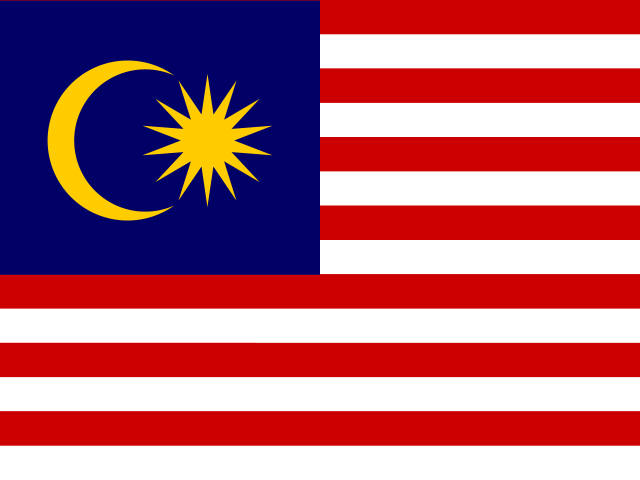
 Malaysia
Comprehensive education database information
Education System in Malaysia
Overview of Malaysia
Malaysia is a vibrant federal constitutional monarchy located in Southeast Asia, characterized by a rich cultural tapestry formed from its diverse ethnic groups. The nation comprises the Malay Peninsula and the northern part of the island of Borneo, with the capital city being Kuala Lumpur. The population of approximately 23 million is predominantly composed of Malays, with significant communities of Chinese and Indian/Pakistani descent.
The historical backdrop of Malaysia includes a period of British colonial rule, which has greatly influenced its contemporary educational framework. Since gaining independence in 1957, Malaysia has evolved into a stable and multiethnic nation, with various political factions reflecting its diverse society. The education system in Malaysia has been shaped by both traditional British models and localized adaptations, paving the way for a unique educational landscape.
Introduction to the Education System
The Malaysian education system is well-structured, comprising several key levels: primary, secondary, vocational, and tertiary education. Each level is governed by specific regulations and standards, ensuring that students receive a comprehensive education that meets national goals. The system aims to accommodate the diverse needs of its populace while promoting social cohesion among different ethnic groups.
Primary Education
Overview
- Compulsory Education: Primary education is mandatory for all children in Malaysia.
- School Types: The system consists of multilingual public schools, private institutions, and options for home schooling.
- Enrollment Age: Children typically start primary school at the age of 7.
- Duration: Primary education lasts for a total of 6 years.
- Language of Instruction: Instruction is provided in the community language chosen by the student.
- Assessment: At the conclusion of primary education, students must take the Primary School Achievement Test to qualify for entry into secondary school.
Secondary Education
Structure
- Phases: Secondary education is divided into two phases, without a separate middle school stage.
First Phase
- The initial 3 years focus on general education, culminating in the Lower Certificate of Education.
Second Phase
- Students select between arts and science streams for an additional 2 years, influenced by personal interests and teacher guidance.
- Stream Switching: Opportunities for changing streams during this phase are limited.
Further Education
After completing secondary education, students have the option to enter 6th form or pursue additional studies for matriculation exemption.
Vocational Education
Overview
- Oversight: The Department of Skills Development manages both public and private vocational training institutions.
- Standards Development: Approximately 1,000 training standards have been established for various levels, including certificates, diplomas, and advanced diplomas.
- Key Areas: The department is focused on creating new training standards in around 20 essential sectors.
Tertiary Education
Overview
- The tertiary education system in Malaysia is marked by complexities due to heavily subsidized programs and quotas that favor the majority ethnic group.
- While efforts are underway to enhance meritocracy, disadvantaged students often turn to private or foreign branch universities as alternatives.
Notable Institutions
- The University of Malaya, founded in 1905 from the Federated Malay States Government Medical School, is the oldest higher education institution in Malaysia, featuring over 2,500 academic staff across 3 campuses.
Conclusion
The education system in Malaysia serves as a vital component of its development, integrating various educational pathways to accommodate the diverse needs of its population. From primary education through to tertiary studies, Malaysia strives to balance traditional practices with modern educational requirements, fostering an inclusive environment for learning and growth.