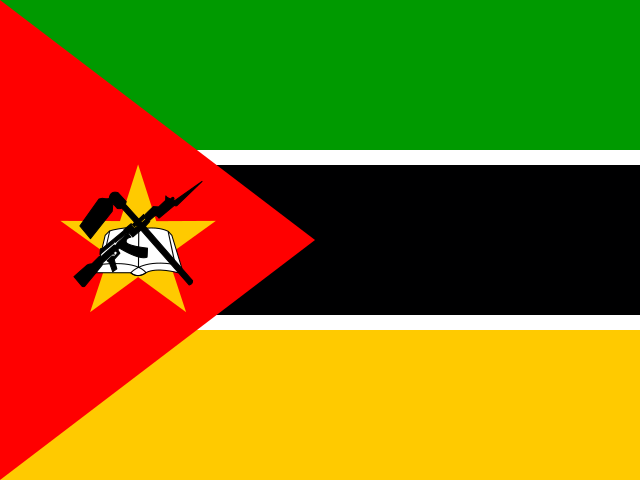
 Mozambique
Comprehensive education database information
Education System in Mozambique
Overview of Mozambique
Mozambique, officially known as the Republic of Mozambique, is situated on the southeastern coast of Africa. It shares borders with several countries, including Tanzania, Malawi, Zambia, Zimbabwe, Swaziland, and South Africa, and is bounded by the Indian Ocean to the east. With a population of approximately 21.3 million, the nation has a literacy rate of around 47.8%. The official language is Portuguese, while local languages such as Emakhuwa and Xichangana are also widely spoken. The region has a rich history, with the arrival of Bantu tribes between the 1st and 4th centuries AD, followed by the establishment of trade routes by Swahili and Arab merchants. The Portuguese explorer Vasco da Gama was the first European to arrive in Mozambique in 1498, leading to Portuguese colonization by the mid-16th century. After gaining independence in 1975, the country faced significant challenges, particularly in rebuilding its educational infrastructure, which had been severely damaged during the colonial era and subsequent conflicts.
Introduction to the Education System
The education system in Mozambique has undergone significant changes since the country achieved independence. While education is officially free and compulsory for children ages 6 to 12, many face barriers that prevent them from completing their education. The system is structured into several levels, including primary, secondary, vocational, and tertiary education. Each level presents unique challenges and opportunities for students, reflecting the broader socio-economic context of the nation.
Primary Education
Structure and Duration
Primary education in Mozambique is mandatory for the first seven years. The typical educational pathway includes:
- Optional Pre-Primary Education: Children may begin their educational journey by attending a pre-primary crèche.
- Jardin Infantil: Following pre-primary, students engage in 2 years of jardin infantil.
- Primary School: This is succeeded by 5 years of primary education, fulfilling the compulsory education requirement.
Despite the structured framework, completion rates remain low due to various socio-economic factors.
Secondary Education
Initial Cycle
Upon completing primary school, students transition to the first phase of secondary education, which lasts 3 years. Typically, students are around 14 years old at this stage. However, several challenges hinder their progress:
- Limited Facilities: Many educational institutions, particularly in rural regions, are under-resourced.
- Economic Pressures: Financial constraints compel students to leave school early in search of work.
Final Cycle
The subsequent two years of secondary schooling see even lower enrollment rates:
- Low Enrollment Rate: Fewer than 7% of eligible students pursue these final years.
- Scarcity of Schools: The nation has only 82 secondary schools, making access difficult for many.
- Curriculum Relevance: The curriculum often fails to meet the practical needs and aspirations of the students.
Vocational Education
The Mozambican government is working to enhance vocational education as part of its poverty reduction action plan. Key aspects of this initiative include:
- Agricultural Focus: Vocational training primarily concentrates on agricultural skills, addressing the immediate needs of rural communities.
- Integration with Poverty Reduction: The emphasis on food security shapes the vocational programs offered.
Tertiary Education
Tertiary education in Mozambique is limited and often inaccessible to a large portion of the population. Key characteristics include:
- Demographics: Higher education predominantly serves a small, wealthier segment of the population, with a significant male representation.
- Geographical Concentration: Most higher education institutions are located in urban areas, further limiting access for rural students.
Key Institutions
The foremost institution of higher learning in Mozambique is Eduardo Mondlane University, established during colonial times in 1962 and located in Maputo. It offers a range of faculties, including:
- Agronomy and Forest Engineering
- Architecture and Physical Planning
- Arts
- Economics
- Education
- Engineering
- Law
- Medicine
- Science
- Social Sciences
- Veterinary Science
Despite current limitations, there is hope that educational opportunities will expand to benefit all citizens of Mozambique in the future.