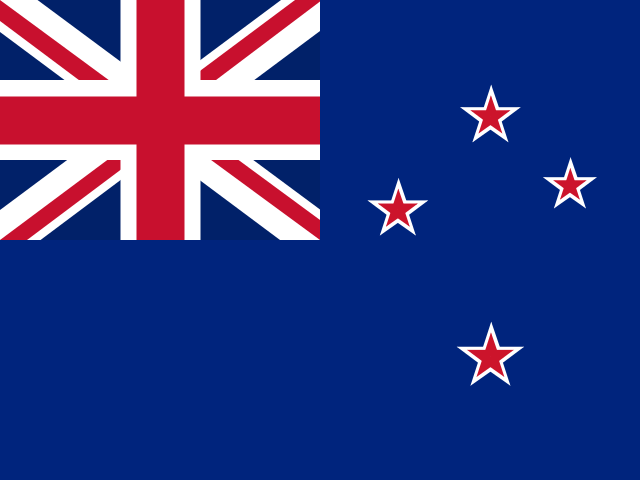
 New Zealand
Comprehensive education database information
Education System in New Zealand
New Zealand, also known as Aotearoa, is a self-governing nation located in the South Pacific Ocean, southeast of Australia. The country comprises a group of islands and has a rich cultural heritage, primarily shaped by the Māori people, who have lived there for over a millennium. The first European to discover the islands was the Dutch explorer Abel Tasman in 1642, followed by British explorer James Cook in 1769. New Zealand became a British colony and was granted dominion status in 1907, later gaining independence. Today, it is a democratic nation characterized by a diverse population, with European, Māori, Pacific Islander, and Asian communities. The education system in New Zealand is known for its quality and accessibility, making it a vital part of the country’s social landscape.
Overview of the Education System
The education system in New Zealand is highly regarded globally, often ranking among the top tiers for quality and effectiveness. Education is both compulsory and free for children aged 6 to 16, although some costs may arise from course materials. The system is structured into several levels, including primary, secondary, and tertiary education. A notable feature is the option for students living more than 5 kilometers from their nearest school to engage in distance learning. Most children start their primary education at age 5, which lasts for 6 years.
Primary Education
- Duration: 6 years (ages 5 to 11)
- Compulsory: Yes, for children aged 6 to 16
- Distance Learning: Available for students who reside over 5 kilometers from their closest educational institution
Middle Education
The transition from primary to middle education can occur through different pathways:
-
Stream A:
- Students may remain at their primary school for grades 7 and 8.
- Alternatively, they might attend a bridging intermediate school.
-
Stream B:
- Students can move directly to a junior secondary school for a duration of 4 years.
Secondary Education
Secondary education in New Zealand allows students to complete their studies according to their selected stream:
-
Stream A:
- Students spend the final 5 years at secondary schools.
-
Stream B:
- Students attend senior secondary schools for their last 3 years.
This blended model caters to the different structural capacities of urban and rural areas, ensuring that high teaching standards are upheld across the educational landscape.
Vocational Education
New Zealand is home to nearly 40 industry training organizations operating under the Industry Training Act. These organizations receive funding from both the state and industry contributions. They provide training through a combination of classroom instruction and practical workplace experience, focusing on:
- Apprenticeships for young individuals
- Retraining initiatives for adults across various age groups
Tertiary Education
The tertiary education sector in New Zealand is well-developed, comprising:
- 8 universities
- Several teacher training colleges
- A variety of private training establishments that fill gaps in the state system, particularly in practical areas such as business, computing, healthcare, and hospitality.
The University of Otago, founded in 1869, is the oldest tertiary institution in New Zealand and serves approximately 22,000 students. It is renowned for its academic excellence, second only to the larger University of Auckland.
Conclusion
In summary, the education system in New Zealand is a structured and comprehensive framework that promotes accessibility and quality education for all. Through its various levels—primary, secondary, and tertiary—New Zealand strives to equip its citizens with the skills and knowledge necessary for personal and professional success, while also acknowledging and incorporating Māori culture and traditions into the educational landscape. The system's flexibility and commitment to high standards ensure that it remains one of the most respected educational frameworks in the world.