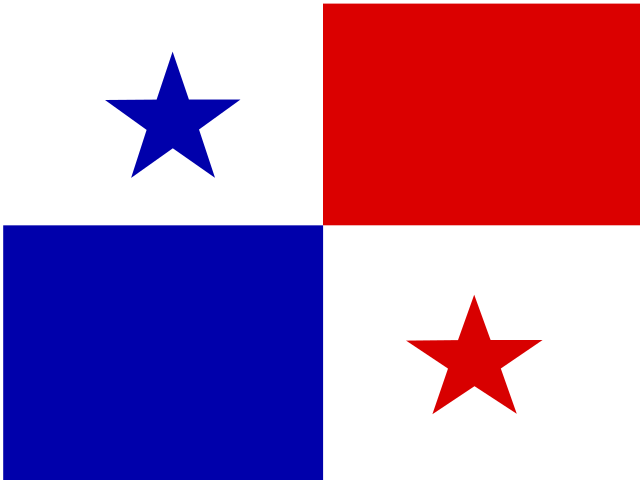
 Panama
Comprehensive education database information
Education System in Panama
Overview of Panama
Panama, a small Central American nation covering approximately 30,000 square miles, is bordered by Costa Rica to the west and Colombia to the southeast. With a population of around 3 million, it serves as a crucial link between Central and South America, largely due to the presence of the Panama Canal. The country's educational journey has evolved through three significant epochs: the Colonial Era (1501-1821), the Colombian Era (1821-1903), and the Republic Era (1903 to present). The foundation of education in Panama dates back to 1519 with the arrival of Jesuit priests, who established primary education. Although the education system faced interruptions and transformations over the centuries, it has seen considerable growth since the early 1900s, leading to a literacy rate exceeding 90% by the late 1990s.
Introduction to the Education System
The education system in Panama is characterized by a blend of public and private institutions, structured into various levels. It is guided by the national constitution, which mandates free and compulsory primary education and supports secondary and higher education. Despite significant progress, the system has encountered challenges, including disparities in access and quality, particularly for students in rural areas.
Primary Education
Structure and Duration
- Compulsory Education: Primary education in Panama is mandatory for children aged 6 to 11 and spans six years.
- Curriculum Focus: The primary curriculum mainly emphasizes the humanities, although it has been criticized for its outdated approach.
Challenges
The primary education system faces severe criticism for its quality, often ranked among the lowest globally. Stagnation over the past three decades can be attributed to governmental reluctance in addressing the issues raised by teachers' unions, leading to a significant need for reform.
Middle Education
Transition to Middle School
- Following the completion of primary education, students progress to three years of middle school, which is also compulsory.
Quality Concerns
The quality of education at this level is particularly problematic in rural areas, where many students are forced into labor, limiting their educational opportunities. This disparity highlights the broader challenges facing the education system in terms of accessibility and equity.
Secondary Education
Recent Reforms
Recent initiatives led by a new Minister of Education aim to enhance the quality of secondary education. These reforms focus on:
- Promotion of Teaching: Encouraging teaching as a noble profession to attract qualified educators.
- Technological Integration: The adoption of modern technologies, such as computers, is being implemented to improve educational outcomes.
Aspirations for the Future
There is a collective hope for a more equitable educational framework that provides all children in Panama with essential opportunities for success, rather than favoring those who can afford private education.
Vocational Education
National Institute of Vocational Training
To bolster the skills needed for national development, the National Institute of Vocational Training and Human Development was established. Its key functions include:
- Setting policy guidelines for vocational training.
- Registering and overseeing private training colleges.
- Maintaining educational standards across vocational programs to ensure quality training.
Tertiary Education
University of Panama
The University of Panama, founded in 1935, is the primary institution for higher education in the country. Over the years, it has expanded its reach and gained international recognition.
Academic Offerings
The university offers a diverse array of programs, including:
- Science and Technology
- Medicine
- Economics
- Law
- Additional fields such as public and business administration, humanities, agricultural sciences, and fine arts.
Growth of Higher Education
Following the establishment of the University of Panama, several other universities have emerged, including private institutions, leading to an increase in enrollment rates. Despite these advancements, socioeconomic disparities continue to affect access to higher education, with significant gaps between different income groups.
Conclusion
Panama's education system has undergone significant changes and improvements over the years but still faces numerous challenges that impact the quality and accessibility of education. Ongoing reforms and initiatives aim to address these issues, fostering an environment where all students can thrive and achieve their potential.