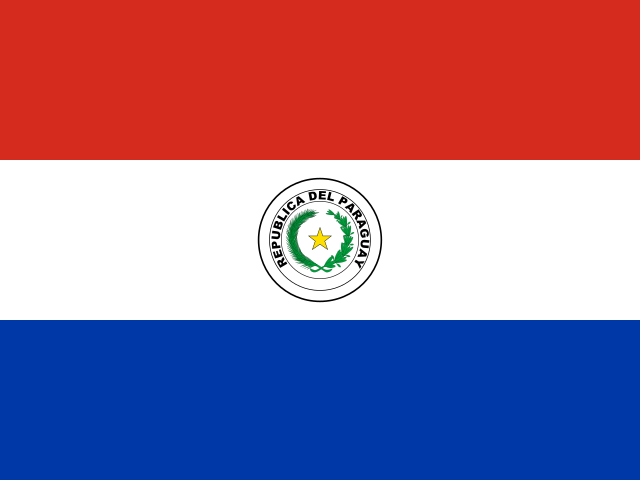
 Paraguay
Comprehensive education database information
Education System in Paraguay
Paraguay, officially known as the Republic of Paraguay, is a landlocked nation situated in the heart of South America. Bordered by Bolivia to the northwest and west, Argentina to the south, and Brazil to the east, Paraguay boasts a rich cultural heritage influenced by both Spanish and Guaraní traditions. The capital city, Asunción, is the largest urban center in the country, which is home to a predominantly mestizo population. The official languages are Spanish and Guaraní, and the majority of the populace adheres to Roman Catholicism, alongside smaller communities of Mennonites and other Protestant groups. The historical journey of Paraguay has been marked by periods of colonialism, dictatorship, and eventual democratization, which have all influenced its current educational landscape.
Overview of the Education System
The education system in Paraguay has seen considerable transformation, particularly in recent years as the nation experiences greater political stability. However, challenges remain, especially concerning access to quality education for children in rural areas, where resources and opportunities may be limited.
Primary Education
- Duration: Primary education spans 6 years, catering to children who begin their schooling at approximately age 7.
- Mandatory Education: Education is compulsory until the age of 14, ensuring that young individuals have a foundational level of education.
- Literacy Rates: While there have been advancements in literacy, 10% to 15% of children remain illiterate, particularly among disadvantaged populations in rural regions.
- Challenges: There is a notable disparity in access to educational resources, with rural children often receiving fewer instructional hours compared to those in urban settings.
Secondary Education
- Structure: Secondary education is organized into two distinct phases, each lasting 3 years.
- Perception: The local perception of secondary education is largely negative, prompting some families to consider sending their children to schools in Chile when financially viable.
- Government Initiatives: In response to these challenges, the Paraguayan Minister of Education is actively seeking to improve local educational facilities and enhance the overall quality of education within the country.
Tertiary Education
- Recognition: The tertiary education sector in Paraguay struggles with a lack of widespread recognition, despite the establishment of several new institutions in recent years.
- Student Migration: A significant number of talented students opt to pursue higher education abroad, aiming for world-class degrees and often choosing to remain overseas for better employment prospects.
- Historical Institution: The oldest university in the nation is the Universidad Nacional de Asunción, founded in 1889. This institution consists of 12 schools across various campuses throughout Paraguay.
In conclusion, while Paraguay's education system is gradually evolving, it still faces considerable disparities and challenges, particularly in rural areas and within the higher education sector. Continued efforts are necessary to address these issues and provide equitable educational opportunities for all Paraguayan students.