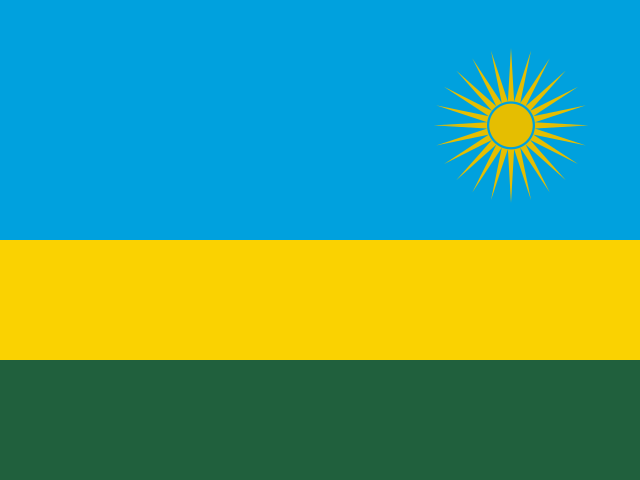
 Rwanda
Comprehensive education database information
Education System in Rwanda
Rwanda, officially known as the Republic of Rwanda, is a landlocked nation located in Central Africa. It shares borders with Uganda, Tanzania, Burundi, and the Democratic Republic of Congo. The country has a population of approximately 10.2 million people and is recognized as the most densely populated nation in Africa. Rwanda's literacy rate stands at 70.4%. The official languages are Kinyarwanda, French, and English, with a notable shift in the medium of instruction from French to English in the education system since 2009. Rwanda has a rich historical context, marked by the interactions of various ethnic groups and significant events that shaped its present-day society.
Overview of the Education System
Rwanda's education system is designed to provide comprehensive learning opportunities across various stages, including Primary Education, Middle Education, Secondary Education, Vocational Education, and Tertiary Education. This structure aims to foster both academic and practical skills, ensuring that students are well-prepared for future challenges.
Primary Education
- Duration: The primary education cycle spans 6 years, beginning at the age of 7.
- Language of Instruction: Instruction is primarily conducted in Kinyarwanda, with French and English introduced progressively, especially as students advance to higher levels of education.
- Transition to Secondary School: At the conclusion of primary education, students must pass the Concours National d'Accès à l'Enseignement Secondaire, an external examination, to qualify for secondary education.
Middle Education
- Duration: Middle education lasts for 3 years and is often referred to as junior secondary school.
- Examinations: Students are required to take the national secondary education ordinary examination at the end of this phase. Success in this examination is essential for progression to senior secondary education.
Secondary Education
- Structure: Secondary education comprises two levels—Lower Secondary (3 years) and Upper Secondary (another 3 years).
- Admission: Admission to upper secondary schools is highly competitive, with fewer than 13,000 places available for those who pass the middle school examination. Many students are enrolled in state boarding schools, while a smaller number attend private institutions.
- Curriculum: The curriculum encompasses 9 distinct groups, and students sit for the Secondary Education Advanced Level Examination Certificate at the end of upper secondary school.
Vocational Education
- Focus on Skills: In April 2011, a renewed emphasis was placed on vocational education to enhance practical skills among students.
- Institutions: The establishment of an integrated polytechnic in Kigali signifies this commitment, with plans for additional vocational centers across the country.
Tertiary Education
- Enrollment Statistics: Tertiary education in Rwanda serves approximately 50,000 students.
- Admission Process: Admission to higher education institutions is competitive, with students pursuing a variety of qualifications, including certificates, diplomas, and degrees.
- Institutions: The higher education landscape comprises 9 polytechnics and 6 universities. The National University of Rwanda, founded in 1963 and situated in Butare, is the leading institution, offering a range of faculties such as:
- Medicine
- Agriculture
- Arts
- Media & Social Sciences
- Applied Sciences
- Law
- Science
- Economics & Management
- Public Health
- Foundation Language Skills
This structured educational system in Rwanda seeks to address the unique challenges faced at each level while promoting equitable access to quality education for all students.