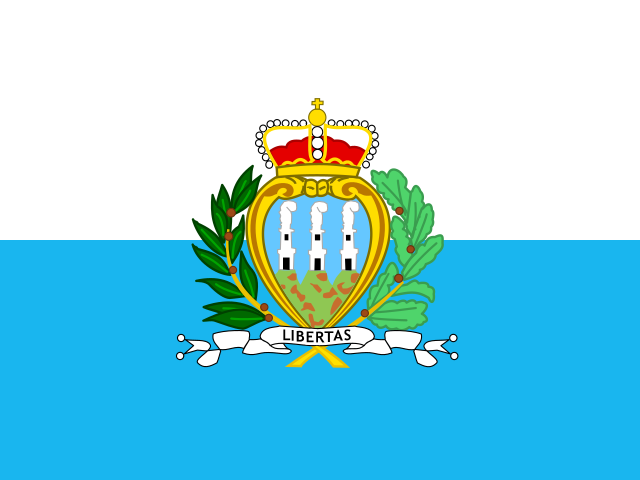
 San Marino
Comprehensive education database information
Education System in San Marino
San Marino, officially known as the Most Serene Republic of San Marino, is a small, landlocked enclave surrounded by Italy. With a population of approximately 30,000, it ranks as the third smallest independent state in the world. The country boasts a literacy rate of 96%, and Italian is the primary language spoken by its residents. Founded in 301 AD by a Christian stonecutter named Marinus, San Marino claims to be the world's oldest republic. The independence of this nation was formally recognized by the Pope in 1631. Although not a member of the European Union, San Marino joined the Council of Europe in 1988 and became a UN member in 1992. The education system is managed by the Ministero dell’Istruzione dell’Università e della Ricerca.
Overview of the Education System
San Marino's education system is structured similarly to that of Italy, emphasizing free and compulsory education from ages 6 to 16. The system is designed to provide a solid foundation for students, ensuring that they have the necessary skills and knowledge to succeed in further education or the workforce.
Primary Education
- Duration: 5 years
- Age Requirement: Education is compulsory starting at age 6 and continues until age 14.
- Assessment: At the conclusion of each academic year, students undergo a national examination to determine their readiness for promotion to the next grade.
The primary education phase lays the groundwork for students' future learning, fostering essential skills in literacy and numeracy.
Middle Education
- Duration: 3 years
- This stage represents a critical transition for students. During middle education, pupils can choose to:
- Enter the workforce armed with their foundational knowledge.
- Continue their studies to improve their employment opportunities in the future.
Secondary Education
- Duration: 2-3 years
- Students who complete secondary education receive qualifications equivalent to an Italian secondary school completion certificate, known as the Diploma di Maturità. This stage further prepares students for either higher education or vocational paths.
Vocational Education
For those who opt not to pursue traditional academic routes, San Marino offers alternative educational pathways, including:
- Vocational schools: Specialized institutions that prepare students for specific trades and professions.
- Adult education programs: Designed for individuals seeking to enhance their skills or qualifications later in life.
Tertiary Education
The University of San Marino, established in 1995, addresses the higher education needs of the country. Key attributes of this institution include:
-
Faculties:
- Biomedical Studies
- Communication
- Economics and Technology
- Historical Studies
- Law
-
Programs Offered: The university provides various programs leading to master's degrees, catering to the educational aspirations of its students.
-
Library Resources: The university library boasts a collection of over 30,000 books and 500 journals. Among its notable holdings are 200 manuscripts dating back before the 18th century, including one from the 15th century and ten that are considered irreplaceable.
Teacher Training
Currently, San Marino lacks its own teacher training programs. Instead, aspiring educators receive their training in Italy, reflecting the close educational ties between the two nations.
In summary, the education system in San Marino is well-structured and adheres to a model that emphasizes accessibility and quality. With a strong foundation in primary education and a variety of paths in secondary and tertiary education, the system aims to equip students with the skills necessary for both personal and professional success.