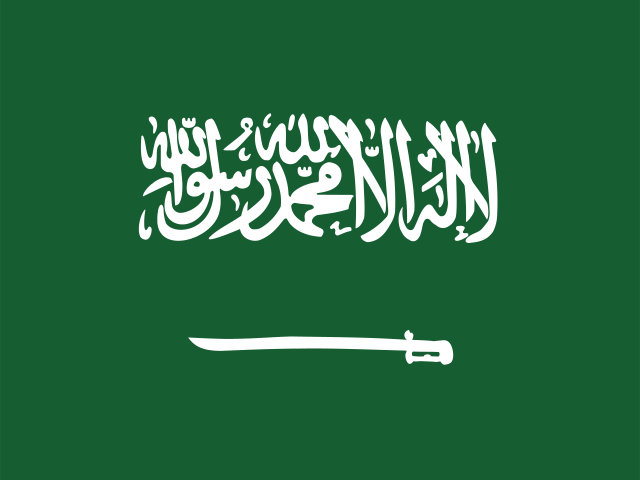
 Saudi Arabia
Comprehensive education database information
Education System in Saudi Arabia
Overview of Saudi Arabia
Saudi Arabia, a country in the Middle East, is known for its rich cultural heritage and substantial oil reserves. The nation has undergone significant transformations since its establishment, particularly in the realm of education. With a youthful population where a majority is under 18 years of age, the education system is crucial for preparing the workforce of the future. The government has prioritized education as a means to foster national development and reduce dependency on oil revenue.
Introduction to the Education System
The education system in Saudi Arabia is designed to provide free and equitable access to education from the early years through to higher education. Established in the early 20th century, the system has evolved significantly, particularly in the 1980s when government funding for higher education surged, leading to a dramatic increase in university enrollment. Over the years, efforts to improve educational access for women have also gained momentum, fostering a more inclusive environment. Despite these advancements, the education system faces challenges including rising student numbers and the need for technological integration.
Education Levels
Primary Education
- Eligibility: Primary education is available to all children free of charge.
- Kindergarten: Attendance in kindergarten is optional.
- Enrollment Age: Children must start primary school at the age of 6.
- Duration: Primary education lasts for 6 years.
- School Type: Primary schools are day schools and are not co-educational.
- Enrollment Statistics:
- Boys: Approximately 99% enrollment rate.
- Girls: Approximately 96.3% enrollment rate.
Intermediate Education
- Duration: Following primary education, students engage in 3 years of intermediate education.
- Gender Representation: Female students make up 47% of the total enrollment.
- Gross Enrollment Rate: The overall enrollment rate for intermediate education is 95.9%.
Secondary Education
- Duration: This stage comprises the final 3 years of compulsory education.
- Educational Pathways:
- Students can continue with general secondary education.
- They also have the option to pursue specialized secondary tracks at technical institutes.
- Vocational Education and Training: Offers programs lasting 3 years in areas like agriculture, commerce, and industrial skills.
- Gross Enrollment Rate: The gross enrollment rate for secondary education is approximately 91%.
Vocational Education
- Government Initiatives: The Saudi government is launching over 150 vocational training centers.
- Job Creation Goals: These initiatives aim to create 3 million jobs over the next decade, reducing the country's reliance on oil.
- Key Areas of Focus:
- Metal processing
- Automotive manufacturing
Tertiary Education
- Universities: There are 24 government universities in Saudi Arabia.
- Degree Duration:
- Medical, pharmacy, and engineering degrees typically require 6 years of study.
- Humanities and social sciences degrees take about 4 years to complete, with these fields chosen by around 70% of students.
- Study Abroad Opportunities: The government provides 5,000 bursaries annually for students to pursue studies overseas.
- Historical Context: King Saud University, the first non-religious university in the Persian Gulf, was established and currently serves over 40,000 students of both genders.
Conclusion
The education system in Saudi Arabia has made significant strides over the past century, focusing on accessibility and inclusivity. While challenges remain—such as accommodating a growing student population and integrating modern technology—the government's commitment to education continues to drive reforms. These efforts are essential for equipping future generations with the skills needed to thrive in an evolving job market. The ongoing development of vocational training and higher education institutions underscores the kingdom's dedication to fostering a knowledgeable and skilled workforce.