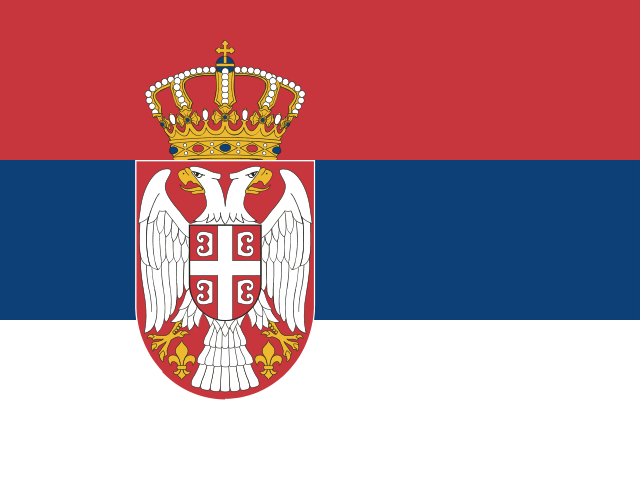
 Serbia
Comprehensive education database information
Education System in Serbia
Overview of Serbia
The Republic of Serbia, situated in southeastern Europe, is a landlocked nation with a population of approximately 10.15 million. It is bordered by several countries, including Macedonia to the south and Hungary to the north. The official language is Serbian, while in the province of Vojvodina, Romanian, Hungarian, Slovak, Ukrainian, and Croatian are also recognized as official languages. In Kosova, Albanian holds official status. The country boasts a literacy rate of 96.4%, which reflects the emphasis placed on education.
Introduction to the Education System
Serbia's education system is organized into distinct levels, ensuring that students receive a comprehensive education from early childhood through to higher education. The Ministry of Education, Science, and Technological Development oversees the educational framework, which comprises primary education, secondary education, vocational education, and tertiary education. Compulsory education lasts for eight years and begins when children reach the age of seven.
Primary Education
Structure and Duration
- Compulsory Age: Education is mandatory for children aged 7 to 15.
- Program Breakdown: The primary education program includes a mandatory 1-year pre-primary phase, followed by two cycles of four years each.
- Total Duration: Students spend a total of 8 years in primary education.
Transition to Secondary Education
Upon completing primary education, a significant majority (96%) of students proceed to secondary school, reflecting the importance placed on continuing education.
Secondary Education
Overview
- Duration: Secondary education typically spans 4 years.
- Types of Schools: Students can choose to attend general high schools or specialized vocational schools.
Curriculum
Students engage in a diverse curriculum that includes subjects such as:
- Natural Sciences
- Social Sciences
- Languages
- Mathematics
Final Examination
At the conclusion of secondary education, students take the Matura exam and receive the Diploma o Završenoj Srednjoj Školi, certifying their completion of secondary studies.
Vocational Education
Pathways
Students who opt for vocational education can attend secondary vocational schools, which provide practical training alongside academic learning.
Duration and Qualifications
- Vocational Programs:
- 2-Year Programs: These are designed to equip students with vocational qualifications.
- 4-Year Programs: These offer further specialization in specific trades.
Tertiary Education
Higher Education Options
Following secondary education, students have various opportunities for higher education, including:
- Više škole: These institutions offer 2- to 3-year vocational and technical programs, culminating in the Diploma Višeg Obrazovanja.
- Universities: Serbia hosts both public and private universities, with the public institutions being particularly competitive.
Notable Institutions
The University of Belgrade, established in 1905, is the oldest and most renowned university in the country. It features:
- 31 faculties
- 8 research institutes
- A comprehensive network of libraries and information centers
Degree Structure
The university education system consists of three main cycles:
- First Cycle: Lasting 4 to 6 years, depending on the discipline, students earn the Diploma Visokog Obrazovnaja.
- Second Cycle: Involves a minimum of 2 years of postgraduate study, requiring the completion of coursework and a thesis, resulting in a Magistar nauka or Magistar umetnosti degree.
- Third Cycle: Doctoral studies, which do not require coursework, are assessed through published research and a dissertation defense, leading to the title of Doktor nauka.
Conclusion
The education system in Serbia is designed to provide students with a solid foundation across various stages of learning, from primary to tertiary education. With a strong emphasis on both academic and vocational training, the system aims to prepare individuals for a diverse range of careers and further studies, ensuring that they are equipped with the necessary skills to succeed in an ever-changing world.