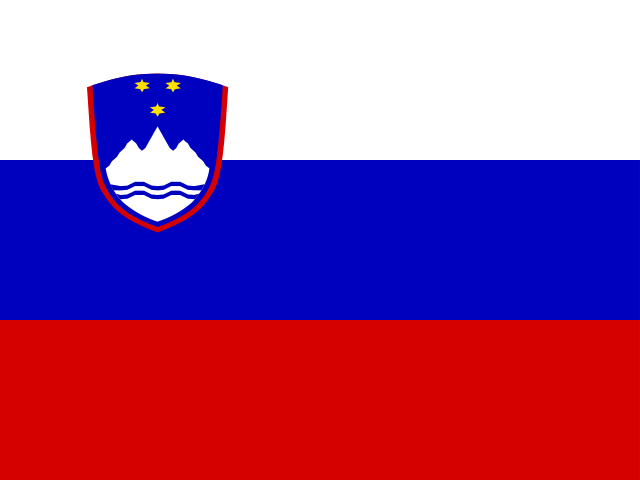
 Slovenia
Comprehensive education database information
Education System in Slovenia
Slovenia, known as the Republic of Slovenia, is situated in southern central Europe, bordered by Italy, Croatia, Hungary, Austria, and the Adriatic Sea. With a population of approximately 2 million people, Slovenia boasts a literacy rate of an impressive 99.7%. The official language is Slovenian, which is also the primary language used for instruction in schools. Historically, Slovenia was settled by Slavs in the 6th century and has since undergone significant political changes, including being part of various empires and states. It gained independence from Yugoslavia in 1991 and joined NATO and the European Union in 2004. Education in Slovenia is both free and compulsory for children aged 6 to 15, overseen by the Ministry of Higher Education, Science, and Sport.
Overview of the Education System
The education system in Slovenia is organized into three main levels: primary education, secondary education, and tertiary education. Each level is designed to equip students with essential knowledge and skills that prepare them for future educational pursuits and career opportunities.
Primary Education
Slovenia's primary education consists of nine years of compulsory schooling, which includes a kindergarten year. This level is divided into three cycles:
-
Lower Primary Education (Grades 1-3):
- In the initial years, students typically stay with a single teacher, known as the master teacher.
-
Upper Primary Education (Grades 4-9):
- Starting in the fourth grade, students transition to a system where they move between different classrooms for various subjects.
- The curriculum broadens to cover a range of subjects such as:
- Native language
- Mathematics
- A foreign language
- Physical education
- Arts
- Two elective subjects from:
- Physics
- Geography
- Chemistry
- History
- Biology
- Housekeeping
- Craft
This structure ensures that students receive a well-rounded education, completing their compulsory schooling with the award of a certificate of completion.
Secondary Education
Secondary education in Slovenia offers three primary pathways:
-
Vocational Education:
- Duration: Approximately 2 years
- Focus: Designed primarily for students to gain immediate entry into the workforce.
-
Technical Education:
- Duration: 4 years
- Focus: Offers specialized training in various technical fields.
-
General Education:
- Duration: 4 years
- Focus: Prepares students for the International Baccalaureate and university studies.
The secondary education system aims to cater to diverse student interests and career aspirations, providing various options to suit individual needs.
Vocational Education
The vocational education system in Slovenia is adapting to new challenges brought about by European Union membership and the globalization of labor markets. Key strategies to improve vocational training include:
- Enhancing the quality of trainers
- Strengthening the collaboration between educational institutions and social partners
- Implementing robust systems for quality control and guidance in vocational training programs
These efforts aim to ensure that vocational education remains relevant and effective in meeting the demands of the labor market.
Tertiary Education
Tertiary education comprises various educational institutions, including universities, colleges, and higher vocational schools. Higher vocational colleges offer 2-year programs culminating in a diploma thesis, which students must defend to earn their qualification.
Slovenia is home to several universities, with the University of Ljubljana being the oldest, established in 1919. This institution is notable for its:
- Enrollment of over 65,000 students
- 23 faculties and 3 academies spread across the urban area
- Historical significance as a stable academic institution that has withstood numerous challenges throughout the 20th century
The structure of tertiary education in Slovenia aims to foster academic excellence and prepare students for advanced professional roles.
In summary, Slovenia's education system is designed to provide comprehensive learning opportunities at all levels, ensuring students are well-prepared for both higher education and the workforce.