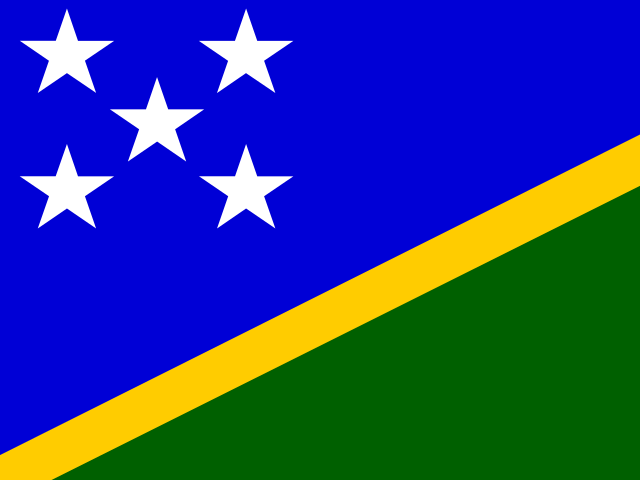
 Solomon Islands
Comprehensive education database information
Education System in Solomon Islands
The Solomon Islands, an archipelago located to the northeast of Australia and east of Papua New Guinea, is comprised of nearly a thousand islands that span about 11,000 square miles. The capital, Honiara, is situated on Guadalcanal Island. The islands became a protectorate of the United Kingdom in the 1890s, achieving self-governance in 1976 and full independence two years later. Throughout the latter part of the 20th century, the nation experienced significant challenges, including ethnic conflict, crime, and governmental issues, leading to an unstable environment. In 2003, with the help of Australia and a multinational task force known as the Regional Assistance Mission to the Solomon Islands (RAMSI), efforts were made to restore order and rebuild the government. While English is the official language, it is only spoken by about 1-2% of the population, which numbers approximately 595,613, and there are around 120 indigenous languages in use. The literacy rate in the Solomon Islands remains undefined, and the education system is largely modeled after that of the United Kingdom.
Overview of the Education System
The educational framework in the Solomon Islands is divided into several levels: primary, secondary, vocational, and tertiary education. Although there is some support from neighboring Oceanic nations, the education system grapples with issues related to accessibility and student retention.
Primary Education
Compulsory Status
Education in the Solomon Islands is not mandatory, which significantly impacts enrollment and completion rates.
Enrollment Rates
- Primary School Enrollment: Fewer than 60% of children are able to enroll in primary schools, which are designed to last for a duration of 6 years.
- Completion Rates: Of those who do enroll, about 72% successfully finish the foundational stage of primary education.
Secondary Education
Enrollment Challenges
Access to secondary education remains low, particularly in rural areas where many families live at a subsistence level.
Gross Enrollment Rates
- Boys: Approximately 32% of boys are enrolled in secondary education.
- Girls: The enrollment rate for girls is even lower, around 27%.
Curriculum Duration
Secondary education typically lasts for 7 years and follows an academic curriculum.
Vocational Education
Community Structure
Most individuals in the Solomon Islands live in small, close-knit villages, which influences their educational and economic activities.
Economic Activities
A significant portion of the population engages in subsistence living, with traditional skills in sectors such as farming and fishing being transmitted through generations.
Tertiary Education
Higher Education Institutions
Tertiary education options are available in the capital, Honiara, through several institutions:
- Solomon Islands Teachers College
- Honiara Technical Institute
- University of the South Pacific (branch)
Access Limitations
While these institutions offer vital educational opportunities, their location in Honiara restricts access for students from poorer, more remote tribal populations.
New Developments
The recently established University of Honiara provides innovative distance learning programs focusing on technology, education, and business studies. This institution has successfully graduated students and is striving to implement credible academic standards, offering enhanced educational prospects for individuals in isolated regions.
In conclusion, while the education system in the Solomon Islands faces several obstacles, ongoing efforts and new initiatives aim to improve educational access and quality for all citizens.