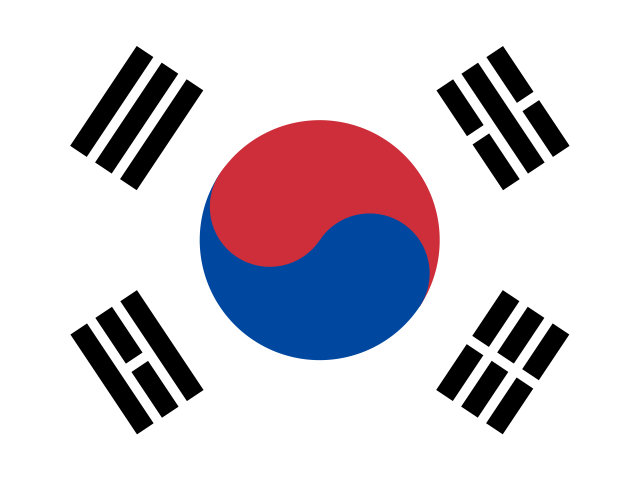
 South Korea
Comprehensive education database information
Education System in South Korea
South Korea, located in East Asia on the southern part of the Korean Peninsula, is known for its vibrant culture, advanced technology, and economic prowess. The country has a population of approximately 51 million people and is characterized by its strong emphasis on education as a key driver of social and economic development. The South Korean education system is renowned for its rigor and competitiveness, aiming to equip students with the necessary skills and knowledge to thrive in a rapidly changing world.
Overview of the Education System
The South Korean education system is structured into several distinct levels: Primary Education, Middle Education, Secondary Education, Vocational Education, and Tertiary Education. Each stage of education plays a vital role in shaping the academic and personal growth of students, fostering critical thinking, creativity, and social responsibility.
Primary Education
Kindergarten
- Optional Attendance: Kindergarten in South Korea is not mandatory. Many families prefer to keep their children at home until they reach the age of six.
Elementary Education
- Compulsory Schooling: Elementary education, known as Chodeung-hakgyo, is mandatory and spans six years.
- Core Curriculum: The subjects taught include:
- Korean Language
- Mathematics
- English
- Science
- Social Studies
- Fine Arts
- Music
- Physical Education
- Moral Education
- Practical Arts
- Teaching Structure: Typically, a single teacher is responsible for instructing all subjects in a classroom setting.
- Private Tutoring: Many parents seek additional educational support through hagwon, which are private after-school academies, particularly for English language acquisition.
Middle Education
Transition to Middle School
- Program Duration: Students progress to a three-year middle school program, with student placements determined through a lottery system to maintain fairness.
Discipline and Structure
- Regulatory Environment: Middle schools enforce a stricter code of conduct, which includes regulations on uniforms, hairstyles, and punctuality.
Curriculum
- Core Subjects: Middle school students receive instruction from specialized teachers in subjects such as:
- Korean
- English
- Mathematics
- Social Science
- Pure Science
- Elective Options: Students may also choose from a range of elective subjects, including:
- Art
- Ethics
- History
- Home Economics
- Music
- Physical Education
- Technology
- Hanja (Chinese Characters)
Secondary Education
High School
- Final Years of Compulsory Education: High school constitutes the last three years of compulsory education, where students can select schools that focus on specific subjects (such as Science or Languages) or opt for a more general education approach.
- Institution Types: High schools may be publicly funded or privately operated, both generally maintaining high academic standards and achieving outstanding student outcomes.
Vocational Education
- Post-Middle School Pathways: About 25% of middle school graduates enroll in vocational schools.
- Training Fields: Vocational education covers five main areas:
- Agriculture
- Commerce
- Fishery
- Home Economics
- Technology
- Curriculum Structure: The first year of vocational training follows a common curriculum, after which students can specialize in their chosen field.
Tertiary Education
-
University Admission: Most high school graduates take the College Scholastic Ability Test (CSAT), a competitive exam required for university admission.
-
Preparation Timeline: Many students begin preparing for the CSAT as early as kindergarten, reflecting the high expectations placed on academic achievement.
-
Assessment Areas: The CSAT evaluates knowledge in five domains:
- Korean
- English
- Mathematics
- Elective subjects, including Social Sciences, Physical Sciences, and the Humanities.
-
Academic Standards: University education is characterized by rigorous academic requirements, and family involvement is often crucial to student success.
-
Societal Support: During key examination periods, businesses may adjust their hours to support students in their studies.
-
Global Recognition: Graduates from South Korean universities earn qualifications that align with international standards, bolstering the nation’s reputation as a leader in knowledge and innovation.
In conclusion, the education system in South Korea is a comprehensive and structured framework designed to promote the intellectual and personal development of students. Through its various levels, from primary to tertiary education, it emphasizes academic excellence, discipline, and the importance of lifelong learning.