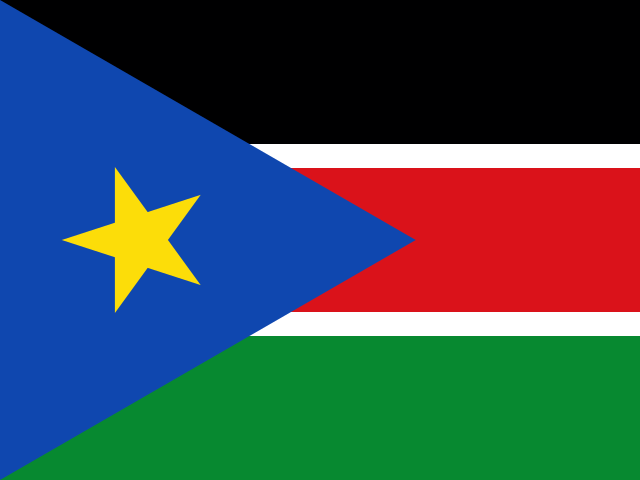
 South Sudan
Comprehensive education database information
Education System in South Sudan
Overview of South Sudan
South Sudan, the youngest nation in the world, gained independence from Sudan in 2011. It is located in East-Central Africa and is characterized by a diverse cultural landscape, with numerous ethnic groups and languages. The country has faced significant challenges since its independence, including ongoing conflicts and economic struggles, which have profoundly impacted its development, particularly in the education sector.
Despite these hurdles, South Sudan is rich in natural resources and has the potential for growth and improvement. The population is predominantly young, with a majority under the age of 30, highlighting the critical need for a robust educational framework to prepare the youth for future opportunities.
Introduction to the Education System
The education system in South Sudan is in a state of development and transformation. It aims to provide quality education to all children, although access remains limited due to various socio-political and economic factors. The government, along with international organizations, is making efforts to rebuild the educational infrastructure and promote literacy and vocational training.
The education system is structured into several distinct levels, each designed to serve different age groups and educational needs. The focus is on ensuring that education is not only accessible but also relevant to the socio-economic context of the country.
Structure of the Education System
Early Childhood Education
Early childhood education in South Sudan is crucial for laying the foundation for lifelong learning. This level is often informal and varies significantly across regions. Key features include:
- Age Group: Typically for children aged 3 to 6 years.
- Curriculum: Emphasizes basic social skills, language development, and early literacy.
- Challenges: Limited access, especially in rural areas, and a lack of trained educators.
Primary Education
Primary education is a fundamental right for children in South Sudan and is designed to provide foundational skills. This level encompasses:
- Duration: Lasts for 8 years, catering to children aged 6 to 14.
- Curriculum: Focuses on core subjects such as mathematics, science, social studies, and languages.
- Enrollment: Efforts are underway to increase enrollment rates, particularly among girls, who face additional barriers.
- Challenges: Infrastructure is often inadequate, with many schools lacking basic facilities and resources.
Secondary Education
Secondary education builds on the knowledge acquired in primary school and is critical for students' academic and vocational paths. Key elements include:
- Duration: Typically lasts for 4 years, for students aged 14 to 18.
- Curriculum: Offers a mix of academic subjects and vocational training options to cater to diverse interests and career paths.
- Access: Many students face obstacles in continuing their education due to economic pressures or security issues.
- Quality: There is a pressing need for improved teaching quality and resources to enhance the learning experience.
Higher Education
Higher education in South Sudan is essential for producing skilled professionals who can contribute to the nation’s development. It includes:
- Institutions: Comprises universities, colleges, and vocational training centers.
- Programs: Offers degrees in various fields, including engineering, health sciences, and social sciences.
- Challenges: Higher education institutions often struggle with funding, infrastructure, and the need for qualified faculty.
Conclusion
The education system in South Sudan is on a journey of reform and growth, aiming to provide quality education for all. While significant challenges remain, particularly in terms of access and resources, ongoing efforts by the government and international partners are paving the way for a brighter future. By investing in education, South Sudan can empower its youth and foster socio-economic development, ultimately contributing to the stability and prosperity of the nation.