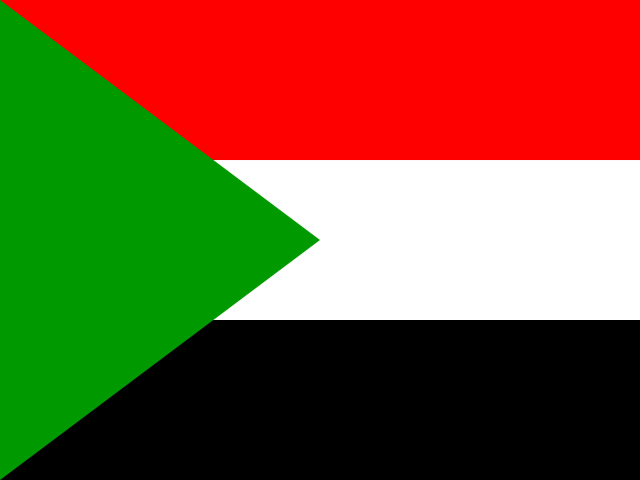
 Sudan
Sudan
Comprehensive education database information
Education System in Sudan
Overview of Sudan
Sudan is a North African nation situated between Egypt and Ethiopia, with a coastline along the Red Sea. It is approximately a quarter the size of the United States and has a rich history of habitation spanning nearly nine million years. The modern nation of Sudan, defined by its current borders, emerged in the early 21st century. The region's history is deeply intertwined with Egypt, particularly during the late 1800s when British colonial rule was established in conjunction with Egypt. Sudan achieved full independence in 1956 but has faced ongoing internal conflicts, primarily between the Arab, Muslim north and the non-Arab, non-Muslim south. The country's governance has often been dominated by military leaders and members of Islamic political parties since a coup in 1989.
Introduction to the Education System
The educational framework in Sudan has its roots in the early 20th century when the British colonial administration established state education. Today, the Ministry of Education and the Ministry of Higher Education and Scientific Research are responsible for overseeing the education system. The current structure includes multiple levels of education, offering a pathway from basic education through to advanced university degrees.
Primary Education
Key Features
- Duration: Primary education spans 8 years, making it a foundational part of the educational journey.
- Age Range: Education is provided free of charge for children between the ages of 6 and 13.
- Language of Instruction: The primary medium of instruction in schools is Arabic.
- Geographical Distribution: Most schools are concentrated in urban areas, which have been more resilient amidst the ongoing civil unrest.
- Gender Access: The ability of young girls to access education is significantly affected by the influence of tribal councils and religious leaders, which can impose restrictions.
Secondary Education
Key Features
- Duration: Secondary education consists of a 3-year program following completion of primary education.
- Enrollment Rate: Approximately 21% of eligible students enroll in secondary education, indicating significant barriers to access.
- Challenges:
- Structural issues within the education system limit enrollment opportunities.
- The recruitment of young males into armed conflict further complicates educational access.
- Focus: Education authorities are adopting a bottom-up approach, prioritizing the enhancement of primary education as a means to improve overall educational outcomes.
Vocational Education
Current State
- The majority of vocational training centers are in a state of disrepair and are not functioning effectively.
- There is a notable lack of coordinated initiatives from the government to bolster vocational education.
- Existing vocational programs are mainly supported by international aid agencies and foreign donors, with a focus on assisting the reintegration of former military personnel into civilian life.
Tertiary Education
Key Features
- Sudan is home to several universities, although evaluating the quality of their educational programs presents challenges.
- The University of Khartoum, the oldest university in the country, was originally established as Gordon Memorial College in 1902 and was re-established in 1956 after Sudan gained independence. It is recognized for its diverse array of faculties and research centers.
- The university's library is among the oldest in Africa, serving as a vital resource for students and researchers alike.
In summary, the education system in Sudan has evolved significantly since its inception, but it continues to face numerous challenges that impact accessibility and quality. The interplay between historical context, socio-political dynamics, and ongoing conflicts shapes the educational landscape, necessitating strategic reforms to enhance opportunities for all Sudanese citizens.