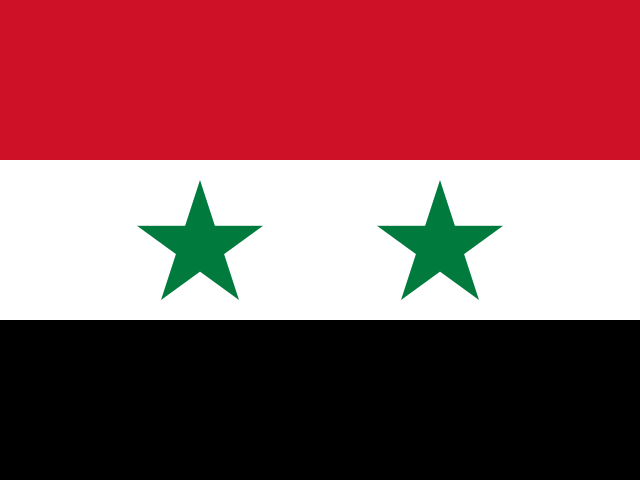
 Syria
Syria
Comprehensive education database information
Education System in Syria
Overview of Syria
The Syrian Arab Republic, located in the heart of the Middle East, is characterized by its predominantly desert landscape and its strategic position bordering the Mediterranean Sea, Lebanon, Jordan, Iraq, and Turkey. Slightly larger than the U.S. state of North Dakota, Syria has a rich cultural history and diverse population. The official language of instruction is Arabic, and the academic year typically runs from September to June. The structure of education varies across different levels, with distinct qualifications awarded upon completion of each stage.
Introduction to the Education System
Syria’s education system has undergone various transformations, particularly in response to economic challenges and political circumstances. Despite these challenges, the country has made strides in establishing a robust framework for education. The Ministry of Education centrally governs the system, ensuring a standardized curriculum while striving to enhance accessibility and quality for all students.
Primary Education
Structure and Duration
- Duration: Primary education in Syria spans six years, starting after children complete kindergarten.
- Compulsory Education: Education is mandated for students from grades 1 to 9, promoting early learning and development.
- Curriculum Control: The Ministry of Education is responsible for developing the curriculum and overseeing educational policies.
- Gender Parity: Efforts are ongoing to achieve equal educational opportunities for boys and girls, although complete parity has yet to be realized.
Challenges
Despite increasing educational expenditures, the system faces challenges such as limited private schooling options and regional disparities in educational resources.
Middle Education
Structure
- Duration: Middle education follows primary schooling and lasts for three years.
- Curriculum: A standardized curriculum is implemented, ensuring that all students receive a cohesive educational experience.
- Assessment: At the end of middle school, students must take a national examination. This assessment determines their eligibility for further studies in either general or technical secondary education.
Secondary Education
Structure and Streams
- Duration: Secondary education comprises an additional three years of study beyond middle school.
- Preparation for Higher Education: The secondary school curriculum is designed to prepare students for tertiary education.
- Educational Disparities: Significant differences in educational quality exist between urban and rural areas, often influenced by parental income and access to resources.
Academic Streams
At the beginning of grade 11, students are guided into two distinct tracks:
- Literary Branch: Focuses on humanities and social sciences.
- Scientific Branch: Emphasizes mathematics and natural sciences.
Students’ performance in national examinations at the conclusion of year 12 determines their eligibility for university admissions and specialization choices.
Vocational Education
Structure and Focus
- Duration: Vocational education typically lasts for three years following middle school.
- Training Opportunities: Technical schools offer specialized training, with young men focusing on industry and agriculture, while young women are equipped with various craft skills.
- Gender Inclusion: Both boys and girls are encouraged to participate in commercial and computer classes, fostering future prospects for gender equality.
Limitations
Students who opt for vocational education are often unable to transition back to academic programs, limiting their educational flexibility.
Tertiary Education
Governance and Institutions
- Oversight: The Ministry of Education oversees tertiary education, which includes universities, higher institutes, and educational hospitals.
- Private Institutions: While the majority of higher education institutions are state-controlled, there is some allowance for privately regulated entities.
Fields of Study
- Emphasis on Technical Fields: The education system places a strong focus on technical disciplines such as engineering, medicine, and sciences, overshadowing fields like arts, law, and business.
- University of Damascus: Established in 1923, this institution is the oldest university in Syria and is currently undergoing revitalization efforts through a strategic plan aimed at enhancing its academic offerings.
Conclusion
The education system in Syria reflects a blend of historical traditions and contemporary challenges. While significant strides have been made in expanding access to education and improving quality, ongoing reform efforts are essential to ensure that all students receive a comprehensive and equitable educational experience. As Syria continues to navigate its complex socio-political landscape, the evolution of its education system will play a crucial role in shaping the future of its youth and the nation as a whole.