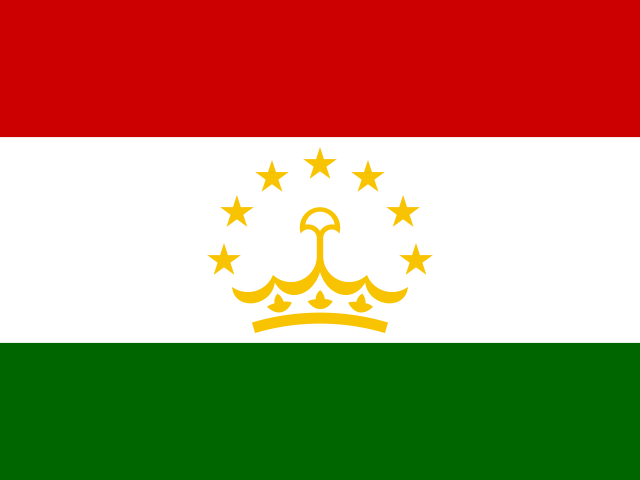
 Tajikistan
Comprehensive education database information
Education System in Tajikistan
Tajikistan, a landlocked country in Central Asia, gained independence from the Soviet Union in 1991. Following its independence, the nation experienced a tumultuous period marked by civil war from 1992 to 1997. This conflict significantly impacted the country’s infrastructure and economic stability. Despite these challenges, Tajikistan has managed to maintain a high literacy rate, which exceeds 90%. The nation is home to diverse ethnic groups, with Tajiks constituting the majority of the population, followed by Uzbeks and a declining Russian community. The official language is Tajik, though Russian is widely used in government and education.
The education system in Tajikistan has made notable progress since independence, with a significant increase in both the number of educational institutions and student enrollments. Nevertheless, the country faces ongoing issues such as economic hardship and the need to improve the quality of education.
Education Levels
Primary Education
- Duration: Primary education lasts for 4 years.
- Accessibility: Education is provided free of charge for children until the age of 17.
- Literacy Rate: The literacy rate in Tajikistan hovers around 100%, reflecting the country’s commitment to education.
- Future Plans: The government has set plans to implement a 12-year educational system by 2016 to align with modern educational standards.
Middle Education
- Duration: Middle school encompasses 5 years of education.
- Challenges: Many students do not progress beyond middle school due to several factors, including:
- Economic difficulties faced by families in a poor country.
- Low salaries for teachers, which compel them to seek additional sources of income.
- The widespread practice of bribery in school admissions.
Secondary Education
- Upper Secondary Schooling: This level includes a 2-year program aimed at preparing students for university entry.
- Quality of Education: The educational standards and facilities in public schools are generally regarded as average to poor when compared to Western educational systems.
- Emerging Alternatives: There is a gradual rise in the number of private schools and colleges, providing more options for students.
Vocational Education
- Impact of Historical Events: The aftermath of the Soviet Union's collapse and the civil war severely disrupted many vocational training centers and workshops.
- Government Support: Limited financial resources have hampered efforts to rehabilitate these facilities.
- Collaborative Efforts: Organizations such as the European Association for the Education of Adults are currently working with the government to enhance vocational education opportunities.
Tertiary Education
- Institutions: Tajikistan has a growing number of tertiary education institutions, with notable progress in the higher education sector.
- Khujand State University: One of the largest and oldest institutions is Khujand State University, established in 1932. It features:
- 76 departments across 15 faculties, including:
- Mathematics
- Physics and Engineering
- Art and Graphics
- Cybernetics
- Foreign Languages
- Management and Computer Technology
- Russian Philology
- Uzbek Philology
- Education and Teaching
- Tajik Philology
- Oriental Languages
- Natural Sciences
- History
- Finance and Market Economy
- Art
- 76 departments across 15 faculties, including:
- Progress: Khujand State University is taking steps toward revitalizing and improving its programs and facilities.
Conclusion
Overall, the education system in Tajikistan, though challenged by historical and economic issues, has demonstrated resilience and adaptability. The commitment to improving educational access and quality is evident through ongoing reforms and the expansion of institutions. As the country continues to navigate its unique challenges, education remains a cornerstone of societal development and cultural identity.