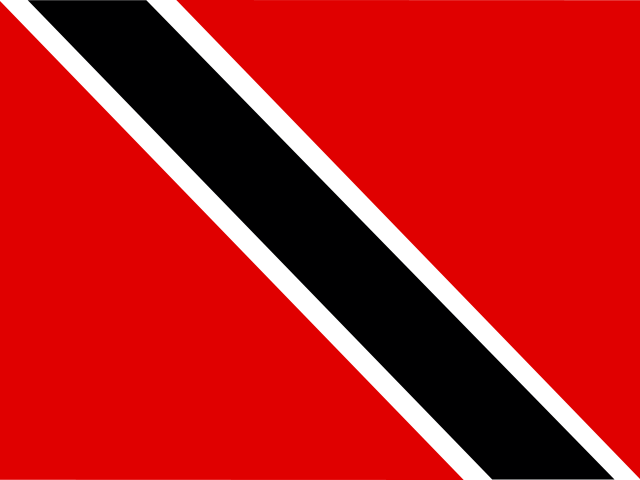
 Trinidad and Tobago
Comprehensive education database information
Education System in Trinidad and Tobago
Trinidad and Tobago, located just off the coast of Venezuela, is the southernmost nation in the Caribbean archipelago. The islands have a rich colonial history, having been influenced by Spanish, British, Dutch, and French rule over the centuries. Gaining independence in 1962 and transitioning to a republic in 1976, Trinidad and Tobago now boasts a population of over one million. The country has a high literacy rate of 98.6%, making it one of the most educated nations in the Caribbean. English is the official language and is predominantly used in educational settings, although other languages such as Caribbean Hindustani, French, Spanish, and Chinese are also spoken. The educational framework of Trinidad and Tobago is largely based on the British model and has evolved significantly over the years to serve a diverse population.
Overview of the Education System
The education system in Trinidad and Tobago is structured into distinct stages: primary, secondary, vocational, and tertiary education. Education is regarded as a high priority and is characterized by a commitment to accessibility and quality.
Primary Education
- Age Requirement: Primary education is mandatory and free for children aged 5 to 15 years.
- Pre-School: While not compulsory, pre-school education may begin as early as age 3.
- Structure: Primary schooling lasts for 7 grades, starting at age 5.
- Assessment: At the conclusion of primary education, students take an entrance examination to determine their placement in secondary schools.
- Family Engagement: The emphasis on education is reflected in the active involvement of families, particularly during assessment periods.
Secondary Education
- Duration: Secondary education is compulsory for the first 5 years.
- Curriculum: Students follow a traditional academic curriculum during this phase.
- Certification: Upon completion, students earn the Caribbean Secondary Education Certificate (CSEC).
- Advanced Studies: Students have the option to extend their education for an additional 2 years to pursue the Caribbean Advanced Proficiency Certificate (CAPE), which is essential for those seeking admission to tertiary institutions.
Vocational Education
- Oversight: The National Training Agency plays a pivotal role in monitoring and enhancing the standards of vocational training.
- Collaborative Efforts: The agency works in partnership with various stakeholders to improve vocational education.
- Achievements: There have been notable advancements in vocational training under the agency's guidance.
Tertiary Education
- University Access: Tertiary education is offered free of charge at the undergraduate level in accredited institutions.
- Recognized Institutions:
- University of the West Indies (UWI): Established in 1960, UWI is the largest provider of higher education in the country, known for its rigorous academic programs.
- University of Trinidad and Tobago (UTT): Founded in 2004, UTT aims to expand post-secondary enrollment and provide diverse academic opportunities.
- University of the Southern Caribbean: Affiliated with the Seventh-Day Adventist Church, this institution operates in Trinidad but lacks accreditation from the relevant authorities.
- Government Support: Some financial assistance is available for students pursuing master’s programs.
- UWI's Motto: The university's motto, "oriens ex occidente lux," translates to “a light rising from the west,” symbolizing its mission to provide enlightenment through education.
In summary, the education system in Trinidad and Tobago is comprehensive and designed to meet the needs of its diverse population. With a strong emphasis on accessibility and quality, the nation has established a robust framework that supports students from primary through to tertiary education.