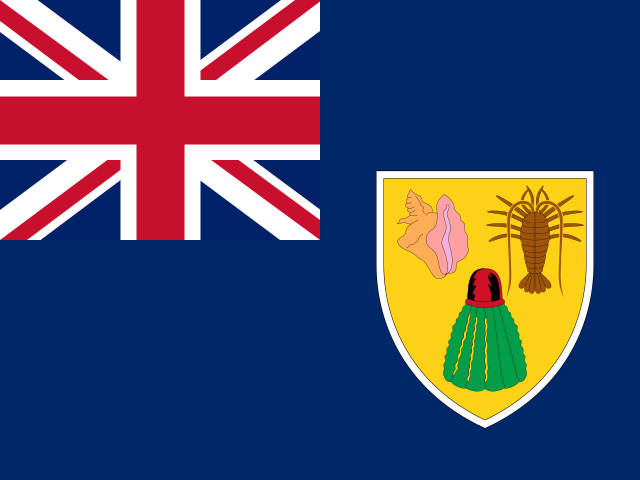
 Turks and Caicos Islands
Comprehensive education database information
Education System in Turks and Caicos Islands
The Turks and Caicos Islands are a picturesque territory situated in the Caribbean Sea, nestled southeast of the Bahamas and to the north of Hispaniola. With a population of approximately 22,352, the islands boast a remarkable literacy rate of 98%. Historically, the islands were first inhabited by Amerindians, later joined by Arawak and Carib tribes. European settlement began in 1678 when salt collectors from Bermuda arrived. Following the American Revolutionary War, many British loyalists migrated to the islands. The British formally annexed the islands in 1799, incorporating them into the Bahamas until they became a separate colony in 1959. Today, the Turks and Caicos Islands function as a British Overseas Territory, governed by a British-appointed governor.
Overview of the Education System
The education system in the Turks and Caicos Islands is designed to offer a comprehensive learning experience, influenced significantly by the British educational framework. While the system aims to provide equitable education for all, it faces challenges such as insufficient teacher training and limited resources. The Ministry of Education, Youth, Culture and Library Services oversees the education sector, ensuring access to quality education from early childhood through to post-secondary levels.
Primary Education
Key Features
- Duration: Primary education spans 6 years.
- Age Requirement: Education is free and compulsory for children between the ages of 6 and 16.
Challenges
Despite the commitment to free education, many primary school educators lack adequate training, which can hinder the quality of instruction. In addition, religious organizations have stepped in to support the education system, striving to ensure universal access to primary education.
Secondary Education
Structure
- Institutions: The secondary education landscape includes 4 public secondary schools and 3 private institutions.
- Duration: This level typically lasts for 5 years, with students completing various assessments.
Examination System
Historically, students were evaluated using the General Certificate of Education Ordinary Level (GCE O-Level) examinations before the establishment of the Caribbean Examination Council (CXC) in 1972. The CXC Caribbean Secondary Education Certificate (CSEC) has since replaced the GCE O-Level as the primary assessment method.
Advanced Education
Students have the opportunity to pursue further education through Form VI, which lasts for 2 years. Upon completion, they can opt to take the CXC Caribbean Advanced Proficiency Examination (CAPE) or the GCE Advanced Level (GCE A-Level) examinations.
Vocational Education
Training Opportunities
The Turks and Caicos Islands Community College is the main institution providing vocational education and training.
Skills Development Programs
The college offers various programs, including training in:
- AutoCAD
- Carpentry
- Electrical Installation
- Tiling
In addition to vocational courses, it also provides professional development programs and adult education opportunities to enhance skills.
Tertiary Education
Community College
The Turks and Caicos Islands Community College serves as the sole post-secondary institution, with campuses located on both Grand Turk Island and Providenciales.
Academic Programs
The college offers a diverse array of 2-year associate degree programs in fields such as:
- Business
- Computer Studies
- Electrical Engineering Technology
- Computer & Electronics Engineering Technology
- Building & Design Technology
- Hospitality Studies
General Education Courses
In addition to specialized programs, the college provides education in core subjects including:
- Chemistry
- Physics
- Biology
- Mathematics
- Sociology
- Economics
- Law & Government
- Politics
A-Level Education and Specialized Training
Students can also pursue A-Level courses in these general subjects, alongside specialized training in areas such as clinical nursing and primary teacher education.
Conclusion
The education system in the Turks and Caicos Islands is evolving, with efforts to enhance accessibility and quality. While challenges remain, the commitment to providing a well-rounded education continues to shape the future of its young population. Through various educational stages—from primary to tertiary—the islands aim to equip students with the knowledge and skills necessary for personal and professional success.