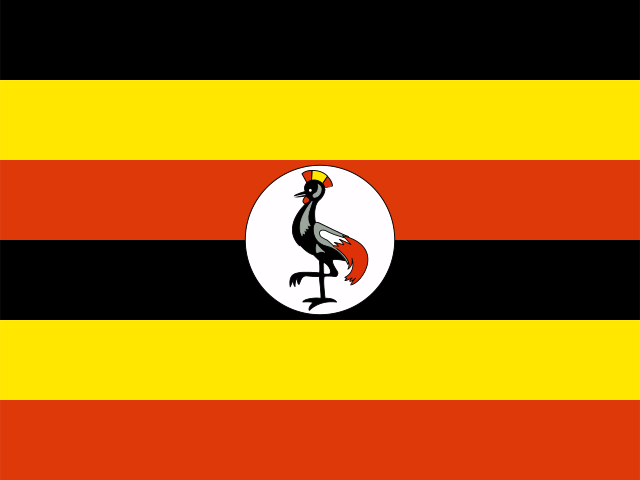
 Uganda
Comprehensive education database information
Education System in Uganda
Overview of Uganda
The Republic of Uganda is a landlocked nation situated in East Africa. Historically, the region was home to well-established tribal kingdoms, which were first encountered by Arab traders in the early 19th century. The British colonized Uganda in 1894, establishing it as a protectorate, and the country gained independence in the early 1960s. Despite its independence, Uganda has faced significant political turmoil, including military coups and civil unrest. Today, Uganda is characterized by a predominantly rural population of approximately 31 million people, with nearly all of its citizens of African descent. English serves as the official language, while many local languages, such as Luganda and Swahili, are widely spoken.
Education is highly valued in Ugandan society, with a primary school enrollment rate of about 89%. However, challenges such as limited infrastructure and resource allocation persist. While literacy rates stand at approximately 66.8%, life expectancy is notably low, averaging just over 45 years.
Introduction to the Education System
The educational framework in Uganda is designed to encompass various stages, including primary, secondary, vocational, and tertiary education. Each of these stages is pivotal for the academic and personal growth of students, as well as for the overall advancement of the nation. The system is gradually evolving to meet the increasing demand for educational access and quality, particularly in light of the nation’s youth population.
Primary Education
Duration and Structure
- Length: Primary education in Uganda spans 7 years, typically commencing at age 6.
- Academic Year: The academic calendar runs from February to December.
Types of Schools
- State Schools: There are few genuinely free government schools in the country, leading many families to seek alternative options.
- Private Schools: The quality among private institutions varies, impacting education standards across regions.
Challenges
- Class Sizes: Classrooms can be overcrowded, with some having as many as 100 students.
- Opportunities: Students who do not achieve passing grades on their leaving examinations may find it difficult to pursue further education.
Secondary Education
Structure and Phases
Secondary education in Uganda is divided into two main phases:
- Lower Secondary: This initial phase lasts for 4 years. Students must pass their O-Level exams to advance.
- Alternative Options: Students may opt for a technical college instead of the traditional secondary route, which lasts for 3 years.
Progression
- Graduates from technical colleges can further their education at technical institutes or enroll in primary teacher training colleges.
Vocational Education
Context and Need
Uganda faces high levels of youth unemployment, creating an urgent need for vocational training to help stimulate the economy.
Collaborative Efforts
Local authorities are collaborating with various foreign aid organizations to improve vocational training and provide youth with essential skills for employment.
Tertiary Education
Institutions Overview
Uganda boasts a diverse array of tertiary education institutions, including:
- 5 public universities
- 11 religiously-affiliated universities
- 10 private secular universities
- 4 technical colleges (including 1 private institution)
Access to Education
Despite the number of institutions, less than 50% of students who qualify for tertiary education can secure admission.
Notable Institution
- The University of Makerere, established in 1922, is the oldest and largest university in the country. Located on a hill overlooking Kampala, it offers a range of programs and features multiple campuses, including facilities specifically for female students.
Conclusion
The education system in Uganda is a reflection of the country's historical context and socio-economic challenges. While strides have been made in increasing access to education, particularly with the introduction of free primary education, significant hurdles remain. Continued investment and innovation in educational practices are essential for meeting the demands of a growing population and for enhancing the quality of education across all levels.