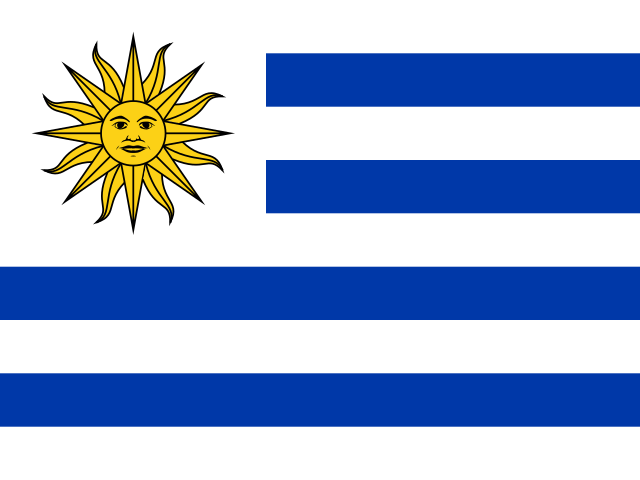
 Uruguay
Comprehensive education database information
Education System in Uruguay
Uruguay, officially known as the Oriental Republic of Uruguay, is a constitutional republic located in the eastern part of South America. It has a coastline along the Atlantic Ocean and is bordered to the west by Argentina and to the north by Brazil. With a population of approximately 3.5 million, around 88% of its citizens are of European descent. The indigenous Charrúas people were the original inhabitants before European colonization. Spanish is the official language, although a blend of Spanish and Portuguese, referred to as Portuñol or Brasilero, is commonly spoken in areas close to Brazil. While Uruguay is secular, nearly 65-70% of the population identifies as Roman Catholic, with over 30% identifying as non-religious or affiliated with other faiths.
Historically, Uruguay has undergone various political transformations, including struggles for independence, civil wars, and military coups. After gaining independence from Brazil in 1825, the country developed under the influence of progressive leadership, particularly during the presidency of José Batlle y Ordóñez from 1903 to 1929. His administration laid the groundwork for a robust welfare state, contributing to Uruguay's reputation as one of the most stable and prosperous nations in Latin America. Education has always been a priority for the government, exemplified by the Law of Common Education established in 1877. The current educational structure is organized by the Ministry of Education and Culture, which oversees all educational institutions in the country.
Overview of the Education System
Uruguay's education system is designed to provide free and compulsory education for children aged 6 to 14 years, laying a solid foundation for both academic growth and future career opportunities. The system is structured into several levels, each catering to different educational needs.
Primary Education
- Compulsory Age: Education is mandatory for all children from ages 6 to 14.
- Enrollment: The country enjoys a high rate of enrollment in primary schools, with many students successfully transitioning to secondary education.
- Curriculum: Children begin their educational journey at age 6, receiving comprehensive instruction across various academic disciplines.
Middle Education
- Duration: The initial stage of secondary education lasts for 2 years, completing the mandatory education phase.
- Subjects: Students continue their studies in essential subjects, which include:
- History
- Languages
- Mathematics
- Sciences
Secondary Education
- Duration: Students attend secondary school for an additional 3 years.
- Streams: During this period, learners have the option to choose from various educational pathways that align with their career aspirations.
- Certification: Upon completion, all students earn a bacheillerato, a credential comparable to a high school diploma in the United States, which qualifies them for university admission.
- Oversight: The entire educational framework is regulated by the Ministry of Education and Culture.
Vocational Education
- A smaller proportion of secondary school students choose to enroll in vocational schools.
- Focus: These institutions emphasize practical skills training, equipping students for specific careers.
- Further Opportunities: Graduates can either pursue shorter vocational courses or participate in international programs aimed at enhancing opportunities for Uruguay's marginalized communities.
Tertiary Education
- Free Education: Higher education remains free of charge in Uruguay.
- Institutions: A variety of institutions provide advanced vocational training, including:
- Labor University of Uruguay: Known for its industrial and evening programs.
- Catholic University: Esteemed for its commitment to high-quality education.
- University of the Republic: Founded in 1849, it is the oldest and most prestigious university in the country, featuring a renowned medical school and 14 additional faculties that serve a diverse student body from across the region.
In summary, Uruguay's education system reflects the country's commitment to providing accessible and quality education for all citizens, fostering both academic and vocational skills essential for personal and national development.