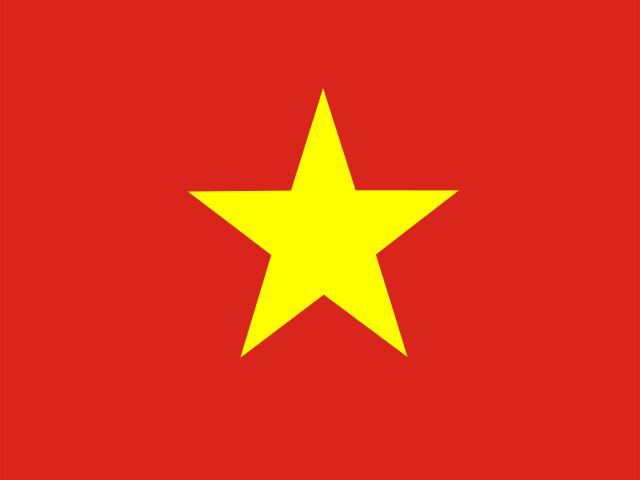
 Vietnam
Comprehensive education database information
Education System in Vietnam
Vietnam is a Southeast Asian nation known for its rich history, cultural heritage, and rapid economic development. The country has made significant strides in improving its education system, which is heavily influenced by Confucian values that emphasize the importance of learning. Education in Vietnam has been a priority since the country's independence in 1945, leading to a remarkable literacy rate of 90% despite the challenges posed by war and economic hardship. The Ministry of Education and Training (MOET) oversees the educational landscape, ensuring that it meets the needs of a growing population and a dynamic job market.
Overview of the Education System
Vietnam's education system is designed to foster a comprehensive learning experience that builds upon the foundational knowledge acquired at each stage. The system is divided into several levels, each catering to the educational needs of children and young adults.
Primary Education
- Age of Admission: Children can start attending public kindergartens as early as 18 months.
- Curriculum: The early education curriculum focuses on basic arithmetic and the alphabet to prepare children for future studies.
- Duration: Primary education is compulsory and lasts for 5 years, beginning at age 6.
Middle Education
- Intermediate Education: Following primary school, students may enroll in trung học cơ sở (intermediate education), which is voluntary.
- Duration: This stage spans 4 years.
- Subjects: The curriculum includes traditional subjects such as:
- Languages
- Mathematics
- Science
- Preparation: This educational phase serves as a foundation for the next 3 years at secondary school.
Secondary Education
- Entrance Examination: Students must pass an entrance examination to qualify for secondary school (trung học phổ thông).
- Curriculum: The core curriculum comprises a diverse range of subjects, including:
- Literature/Reading
- Mathematics (including Calculus and Geometry)
- Physics
- Chemistry
- Biology
- History
- Geography
- Civics
- Foreign Languages
- Technology
- Information Technology
- Physical Education
- Social Studies
- Advanced Courses: Some prestigious schools offer advanced classes in Natural and Social Sciences.
Vocational Education
- Development: Since 1987, the Vietnamese government has focused on developing a cohesive vocational education system to meet the labor market's evolving needs.
- Programs Offered:
- 1-3 years of vocational training
- 2-3 years of vocational and technical education
- Quality Control: The government centrally monitors the quality of vocational programs to ensure they meet industry standards.
Tertiary Education
- University Admission: Gaining entry to university requires students to achieve high grades in secondary school and perform well on entrance examinations, which is especially critical for those from disadvantaged backgrounds.
- Degree Options: Students can pursue various academic paths, including:
- An undergraduate degree
- A 2-year doctoral program
- A 4-year master's qualification
- Private Universities: Vietnam has 11 private universities, which represent 11% of all higher education institutions. While these universities are gaining popularity, they face challenges related to quality, affordability, and bureaucratic issues.
This structured approach to education in Vietnam aims to equip students with the essential skills and knowledge required to succeed in a competitive global landscape. The government continues to prioritize educational reforms, ensuring that the system evolves to meet both local and international demands.