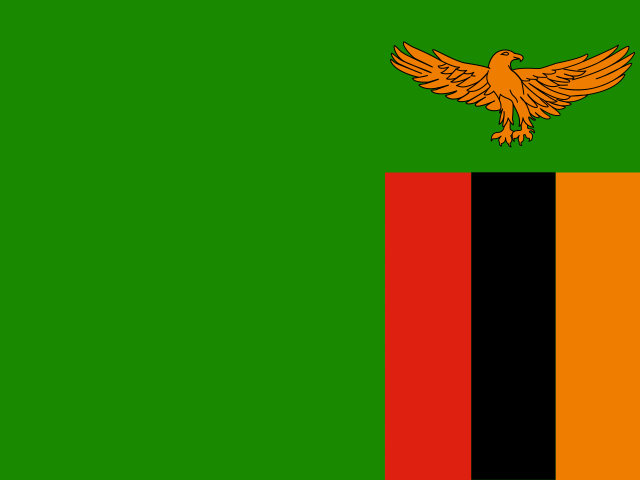
 Zambia
Comprehensive education database information
Education System in Zambia
Zambia is a landlocked country located in southern Africa, bordered by eight nations. Known for its rich cultural heritage and diverse ecosystems, it is home to the famous Victoria Falls, one of the largest and most spectacular waterfalls in the world. The country's economy is primarily based on agriculture, mining, and tourism, with a significant portion of the population relying on subsistence farming. Education plays a vital role in Zambia’s development, as it aims to equip its citizens with the skills and knowledge needed to improve their livelihoods and contribute to national growth.
Overview of the Education System
The education system in Zambia is modeled after the British system and is regulated by the Ministry of General Education. The framework emphasizes the importance of education for all children, mandating that schooling begins at age seven and continues until the age of fourteen. However, many students face financial barriers that lead to high dropout rates after the compulsory education phase. The structure of the Zambian education system is organized into distinct levels, each with specific objectives and requirements.
Structure of the Zambian Education System
The Zambian education system follows a 7-5-4 structure, encompassing the following stages:
- 7 years of primary education
- 2 years of junior secondary education
- 3 years of senior secondary education
- 4 years of university education for undergraduate degrees
While the government aims to make education accessible to all, various socioeconomic challenges hinder many children from completing their studies.
Primary Education
Primary education in Zambia spans seven years, starting at age seven. This phase focuses on foundational skills, including literacy, numeracy, and essential life skills. Despite its importance, numerous children drop out before completing this level due to economic hardships and other barriers.
Junior Secondary Education
Following primary education, students transition to junior secondary education, which lasts for two years. This stage is crucial for those who wish to continue their studies, but many students opt to enter the workforce, driven by cultural beliefs that they have acquired sufficient education.
Senior Secondary Education
Students who wish to pursue higher education must first pass a selection examination to gain entry into senior secondary school. This level lasts for three years, where students work diligently to meet the academic requirements necessary for university admission. Successful completion leads to either the Zambian School Certificate Examination or the General Certificate of Education Ordinary Level (GCE O-Levels).
Vocational Education
In recognition of the need for a skilled workforce, the Zambian government is revitalizing its technical education, vocational, and entrepreneurship training programs. These initiatives aim to develop human resources that can effectively contribute to the nation’s economic growth and diversification.
Tertiary Education
Zambia is home to several universities, with the University of Zambia, established in 1964, being the oldest and most prominent institution. Other notable universities include:
- Copperbelt University (Kitwe)
- Zambia Adventist University (Monze)
- Northwest University (Ndola)
- Cavendish University (Lusaka)
The University of Zambia offers a wide range of academic programs across various disciplines, including:
- Agricultural Sciences
- Education
- Engineering
- Humanities & Social Sciences
- Law
- Mines
- Medicine
- Natural Sciences
- Veterinary Medicine
Undergraduate programs typically span four years, while specialized degrees in fields like engineering and architecture may take up to five years. Postgraduate studies, including master’s degrees, generally require an additional 15 months to 2 years of study after obtaining a bachelor's degree, while doctoral programs last a minimum of three years following a master's.
Conclusion
The education system in Zambia is designed to provide students with essential knowledge and skills, preparing them for the challenges of the modern world. While progress has been made, significant challenges remain, particularly in ensuring equitable access to education for all children. Through ongoing reforms and investment in education, Zambia aims to enhance the quality of schooling and reduce dropout rates, ultimately fostering a more educated and skilled population to drive national development.